




If you live in Southeast Michigan, you already know the pattern. The wind picks up. The lights flicker. Then the power drops, and suddenly you are thinking about your sump pump, your furnace, your refrigerator, and how long the outage is going to last.
That is exactly why a recent Hire It Done episode focused on generators and what homeowners need to know before they buy one. In that conversation, Adam Helfman sat down with Josh Young of Voltron Power, a licensed and insured electrical contractor serving the greater Oakland County and Metro Detroit area.
The biggest takeaway was simple and important: the best generator is not just the one with the biggest name or the highest wattage. It is the one that is installed properly.
That matters because a generator is not just another home upgrade. It touches your electrical panel, your gas supply, your safety systems, and your daily comfort.
If you make the right decision, you get peace of mind when the grid fails. If you make the wrong one, you can end up with wasted money, unsafe wiring, or a system that does not do what you expected.
Why Generators Matter More Now
Power outages do not feel like a rare inconvenience anymore. Adam talked about how outages that once lasted an hour or two can now stretch into one, two, or even three days. For homeowners in Metro Detroit and surrounding communities, that changes the conversation.
When the power goes out, you are not just losing lights. You could lose your furnace in freezing weather. You could lose your sump pump during heavy rain. You could lose the food in your fridge and freezer. If anyone in your household relies on powered medical equipment, internet access, or basic climate control, the risk gets even higher.
That is why generators are starting to feel less like a luxury and more like a serious home protection tool. In the same way air conditioning became standard over time, backup power is becoming something more homeowners are considering before the next storm hits.
Portable or Whole-House?
A lot of homeowners start in the same place. They wonder whether they should buy a portable generator from a big box store or invest in a standby system.
On paper, the portable option looks cheaper. In real life, it often creates more hassle than homeowners expect.
Josh explained that portable generators are manual. That means when the power goes out, you still have to go outside, pull the unit out, check the gas and oil, run cords, and get everything going while the weather is probably terrible. You also have to use it safely. As he put it, “You have to hook your portable generator up safely.” If you do not, you can create serious risks for your home and family.
That includes carbon monoxide danger if someone runs the unit in a garage, basement, or enclosed space. It also includes unsafe hookups when people try to improvise instead of using the right transfer equipment.
A standby generator changes that experience completely. When utility power drops, the system senses it, starts automatically, and transfers power to your home within seconds. You do not have to drag anything outside. You do not have to guess whether the utility power is back. You do not have to fumble with extension cords in the middle of a storm.
If you want convenience, speed, and a safer long-term solution, a properly installed standby generator is the smarter path.
 Size for the Life You Live
One of the most useful parts of the episode was how Josh broke down generator sizing in plain English.
He explained that a contractor should not just show up and throw out a random number. The process starts with a house visit and a conversation about your critical circuits. In other words, what absolutely needs to work when the power goes out?
For many homeowners, that list starts with the furnace, sump pump, refrigerator, freezer, and microwave. If you are trying to cover the bare minimum, Josh said a 10,000- to 11,000-watt generator may handle those essentials. But if you want to run larger 220-volt appliances like central air, an electric dryer, an electric stove, or EV charging, you need a larger system.
That is where many homeowners make a mistake. They focus only on the sticker price of the generator itself. Josh pointed out that the cost jump from a lower-wattage unit to a higher-wattage whole-house unit is often not as dramatic as people assume when you look at the total installed project. So if you are already investing in backup power, it may make more sense to think a little bigger.
The right question is not “What is the cheapest generator I can buy?” The better question is “What do I want my house to do when the power goes out?”
Why Installation Matters More Than Brand
This was the heart of the episode, and it is the reason this angle makes the strongest blog topic.
Adam said it several times, and Josh agreed: “The best generator is the one that’s installed properly.”
That is not a catchy phrase. It is the real decision point.
Yes, brand matters. Josh said Voltron Power primarily installs Generac systems and likes the company’s training, dealer support, and product accessibility. But even a respected brand can fail you if the installation is sloppy.
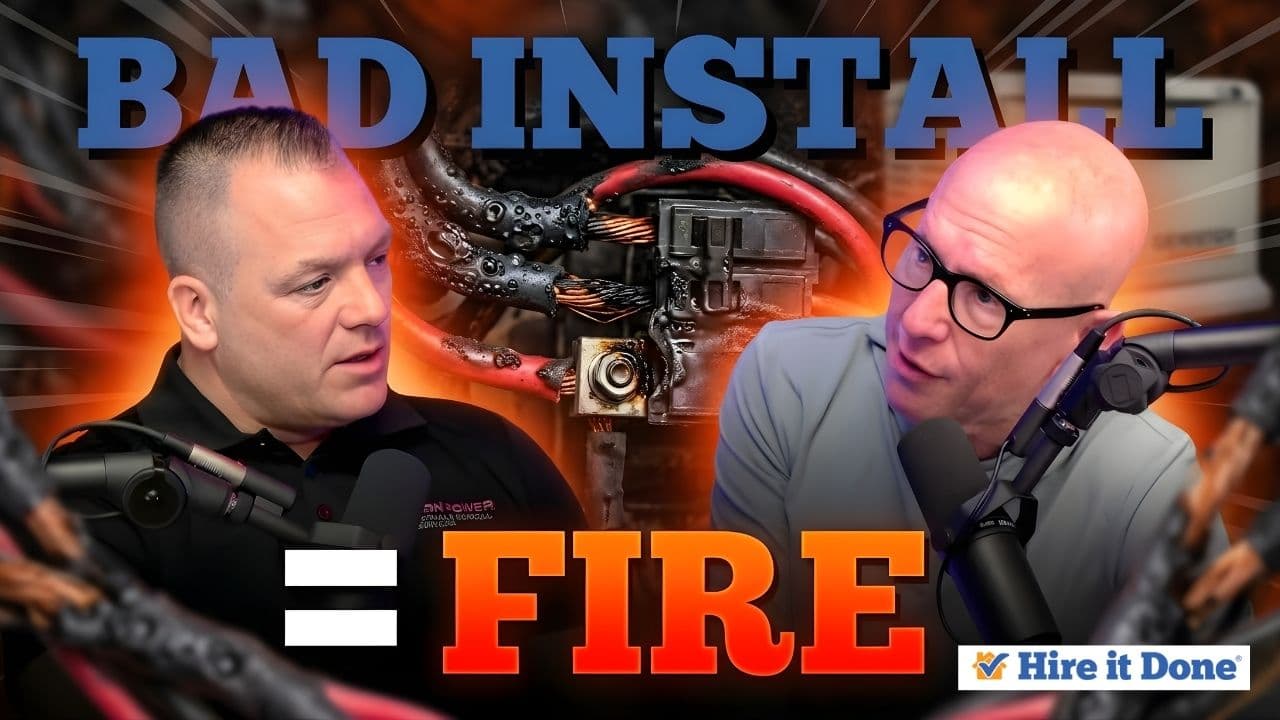
A bad install can create undersized lines, poor transfer switch setup, gas delivery problems, and fire hazards. Josh specifically warned that undersized lines carrying too much amperage can become a fire hazard. That is not a cosmetic issue. That is a home safety issue.
This is why choosing the contractor matters so much. You want someone who understands load calculations, transfer switches, code requirements, gas coordination, and real-world troubleshooting. You also want someone who knows how to pull permits and work through inspections instead of trying to cut corners.
If a contractor hides behind a brand name, that should concern you. A generator is only as good as the person designing and installing the full system.
Permits, Gas Lines, and Timing
A generator install is not just a box placed outside your house.
Josh explained that the process can involve two inspections: one for the gas line and one for the electrical work. He also noted that the timeline often depends on your municipality, because inspection schedules vary from city to city. In some cases, a project can move as quickly as two weeks. In others, scheduling and utility coordination can slow things down.
Gas supply is another issue homeowners often overlook. If your meter is too small, the generator may not get the gas volume it needs under heavier load. Josh said that increasing the gas meter size through the utility often costs around $600 to $800, depending on the situation. That is not a detail you want to learn after installation starts.
This is also why the quote process matters. A serious contractor should evaluate your home, your panel, your load, your gas setup, and your goals before they tell you what system makes sense.
How to Choose the Right Electrical Contractor
If you are comparing generator quotes in Southeast Michigan, do not just compare brands and final prices.
Ask how the contractor determines the correct generator size. Ask whether they pull permits. Ask how they handle transfer switches, gas coordination, and inspections. Ask what happens if your meter needs upgrading. Ask who services the system after install. Ask how quickly the generator can be installed and what support you get after the job is done.
Most of all, look for a contractor who explains things clearly instead of pressuring you.
That is what made Josh Young of Voltron Power come across well in this recent Hire It Done episode. He did not just talk about selling generators. He talked about safety, load planning, permits, practical expectations, and making sure homeowners choose the right path for their house. And that is exactly the kind of mindset you want when you are hiring someone to protect your home.
 Final Thoughts
If your lights flicker every time the wind picks up, this is your sign to stop treating backup power like a someday project.
A generator can protect your heat, your food, your basement, and your peace of mind. But the smartest move is not buying the first unit you see online or chasing the cheapest quote. The smartest move is getting the system sized correctly, installed correctly, and inspected correctly.
That is how you turn a generator from an expensive piece of equipment into real protection for your home.
Tags: