



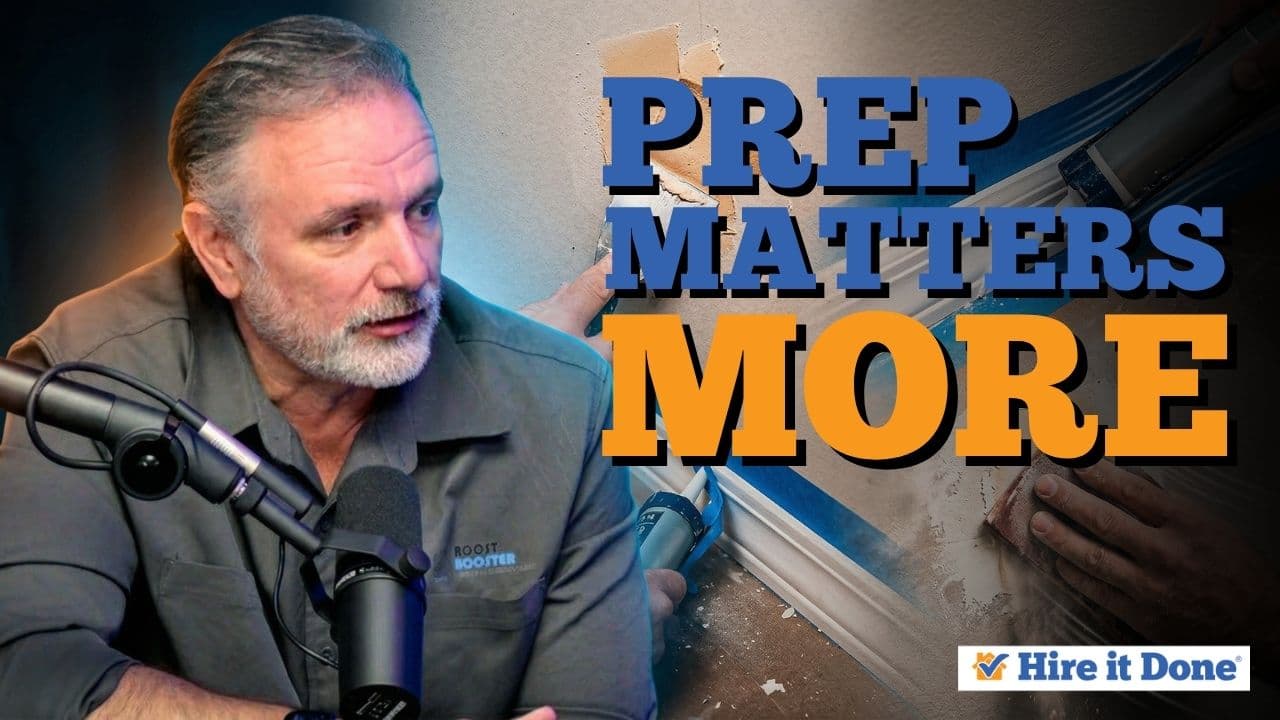

If you want a paint job that actually looks clean, smooth, and worth your money, you need to care about prep work more than color charts. That was one of the clearest takeaways from a recent Hire It Done episode with John Cox of Roost Booster painting and remodeling, a contractor with more than two decades in the business. His point was simple: the finish only looks as good as the surface underneath it.
That matters because most homeowners judge a paint job by the final color. But the real quality shows up in the details you notice later. You see it in the patched hole that disappears completely. You see it in trim lines that look sharp instead of messy. You see it in walls that stay clean longer and do not start bleeding stains back through.
If you are planning to hire a painter, this is what you need to know before anyone opens a can.
Prep Is The Real Job
A lot of people think painting is easy. In one sense, it is. Almost anyone can buy brushes, rollers, and a few gallons of paint. But that does not make them a skilled painter. The difference between a quick paint job and a professional result usually comes down to what happens before the first coat goes on.
John Cox said it plainly: “Prep is everything.” He even went a step further when Adam asked whether prep was just as important as the paint. His answer was: “It’s more important.”
That should change how you look at every estimate you get.
A painter who cleans surfaces, caulks gaps, repairs holes properly, sands rough areas, protects your furniture, and blocks stains is not wasting time. That painter is building the final result.
What Prep Really Includes
Good prep work usually includes:
- cleaning off dust, dirt, and debris
- caulking gaps around trim and baseboards
- patching holes and damaged drywall
- sanding rough repairs smooth
- priming stained or problem areas
- protecting floors, furniture, and fixtures
If any of those steps get skipped, the paint may still go on, but the room will not look finished.
Bad Prep Always Shows
You may not notice bad prep from across the room on day one. You will notice it later.
That patch where the doorknob hit the wall? Still visible. That old repair line in the drywall? Still there. That dirty wall behind the couch? Now the stain is bleeding through the fresh paint. Those ugly little gaps between the trim and the wall? They still catch your eye every time you walk by.
That is why professional painters do not just “cover it up.” They fix the surface first.
John talked about seeing old repairs done by others where you can still spot the square patch or every filled nail hole after painting. That is exactly what you are paying to avoid. A quality paint job should not advertise every old mistake in your walls. It should make the room look cleaner, tighter, and more finished than before.
Do Not Rush Day One
One of the biggest mistakes you can make is expecting visible paint on the walls right away.
If your painter says the project will take five days, you may assume 20 percent of the painting should be done after day one. That is not how a professional job works. On the episode, John explained that some homeowners call and worry because “there’s no paint on the walls” yet. In reality, that can be a good sign. It often means the crew is still doing the prep and repair work properly.
That first day may be spent moving and covering furniture, cleaning surfaces, sanding, caulking, patching, and protecting the space. You may not see color going up yet, but the important work is happening.
Trust The Process
If the prep is thorough, the paint goes on better. The lines look better. The finish lasts longer. Touch-ups are easier. Problems are less likely to show through later.
A fast start can feel reassuring. A well-prepped start is what you actually want.
Do Not DIY The Repairs
A lot of homeowners try to save money by doing the drywall repairs themselves before the painter arrives. That sounds reasonable, but it often backfires.
If the repair is not done well, the painter either has to redo it or paint over something that will still show. John made a strong point here. He tells customers it usually makes more sense to let his crew handle the repairs from start to finish because they can often do them quickly and correctly as part of the process.
That matters for one simple reason: a painter cannot guarantee a great finish over a bad repair.
If something on your wall bothers you, point it out before the work starts. Do not assume the crew will notice every bump, ripple, patch line, or scar that catches your eye every day. Walk the job with the painter. Use blue tape if needed. Show them exactly what you want addressed.
That one small step can save you a lot of frustration later.
Stains Need More Than Paint
Not every ugly wall issue is just dirt.
In homes with smoke exposure, oils, grime, or old stains, a fresh coat of paint may not solve the problem by itself. Those marks can bleed through unless the painter uses the right stain-blocking primer first.
That is a big deal in kitchens, hallways, staircases, and other high-touch areas. Hair oils, handprints, old smoke residue, and hidden grime can all sabotage the finish if they are not treated properly.
A good painter should know when a wall needs cleaning, when it needs primer, and when it needs both.
Paint Must Match Your Life
This was another smart point from the episode. The best paint is not always the most expensive paint. It is the right paint for the way you live.
If you have kids, pets, sports gear, heavy traffic, or busy stairways, you may need a more washable, scuff-resistant product. If you live in a quieter home and your walls hardly get marked up, you may not need the premium upgrade.
That kind of recommendation shows honesty. It also shows experience.
John explained that he asks homeowners practical questions first. How long will you stay in the house? Do you wash your walls often? How long has it been since the last paint job? Those questions help match the product to the home instead of pushing a one-size-fits-all solution.
Hire Smarter From The Start
Prep work also tells you a lot about the contractor you are hiring.
A good painter should explain the process clearly, put the scope in writing, and tell you what is included and what is not. You should know the prep steps, the products, the timeline, the cleanup plan, and the payment schedule before the job starts.
This is also where deposit structure matters. In the episode, John said he typically takes a 20 percent deposit to cover materials, not 50 percent upfront. That is the kind of detail homeowners should pay attention to. It shows confidence, structure, and professionalism.
When a painter respects prep, communication, and written expectations, you are usually dealing with someone who respects the finished job, too.
Your Best Paint Decision
If you remember one thing from this recent Hire It Done episode, remember this: paint does not fix bad prep.
You can choose a beautiful color. You can buy premium products. You can spend real money. But if the surfaces are dirty, damaged, poorly patched, or badly caulked, the result will still disappoint you.
So before you ask what color to use, ask a better question: how will you prep the room?
That question can save you money, stress, and the regret of paying for a paint job that looked good only until the light hit it the wrong way.
Frequently Asked Questions
Why is prep work so important before painting?
Prep work creates the surface the paint has to stick to and finish on. If the wall is dirty, damaged, or uneven, the final result will look sloppy, no matter how good the paint is.
Can a painter just paint over old wall damage?
A painter can, but you probably will not like the result. Holes, patch lines, dents, and rough repairs usually show through unless they are properly fixed and sanded first.
How do I know if a painter does quality prep?
Ask what their prep process includes before the job starts. A professional should mention cleaning, caulking, patching, sanding, priming, protection, and cleanup without sounding vague.
Is it normal if no paint goes up on day one?
Yes, that can be completely normal. A strong crew may spend the first day or more on prep so the actual painting goes faster and looks better.
Should I do my own wall repairs first?
Usually, no. If your repairs are not done correctly, they may still show through after painting, and the painter may need to redo them anyway.
What causes stains to bleed through fresh paint?
Smoke residue, oils, grime, water marks, and certain old stains can come through new paint. These areas often need stain-blocking primer before the topcoat goes on.
Does expensive paint always mean better results?
Not always. The right paint depends on your household, traffic level, cleaning habits, and how long you plan to stay in the home.
What should a painting estimate include?
It should clearly spell out prep work, materials, paint areas, exclusions, cleanup, timeline, and payment schedule. If those details are missing, ask for them in writing.
How much deposit should you pay a painter?
It depends on the job, but a smaller deposit tied to materials is generally more homeowner-friendly than paying half upfront. Always make sure payment terms are written down clearly.
What should I point out before painting starts?
Show the painter every area that bothers you, even if it seems minor. Mark bumps, bad patches, wall scars, stains, or trim issues before prep begins, so nothing gets missed.
Tags: