



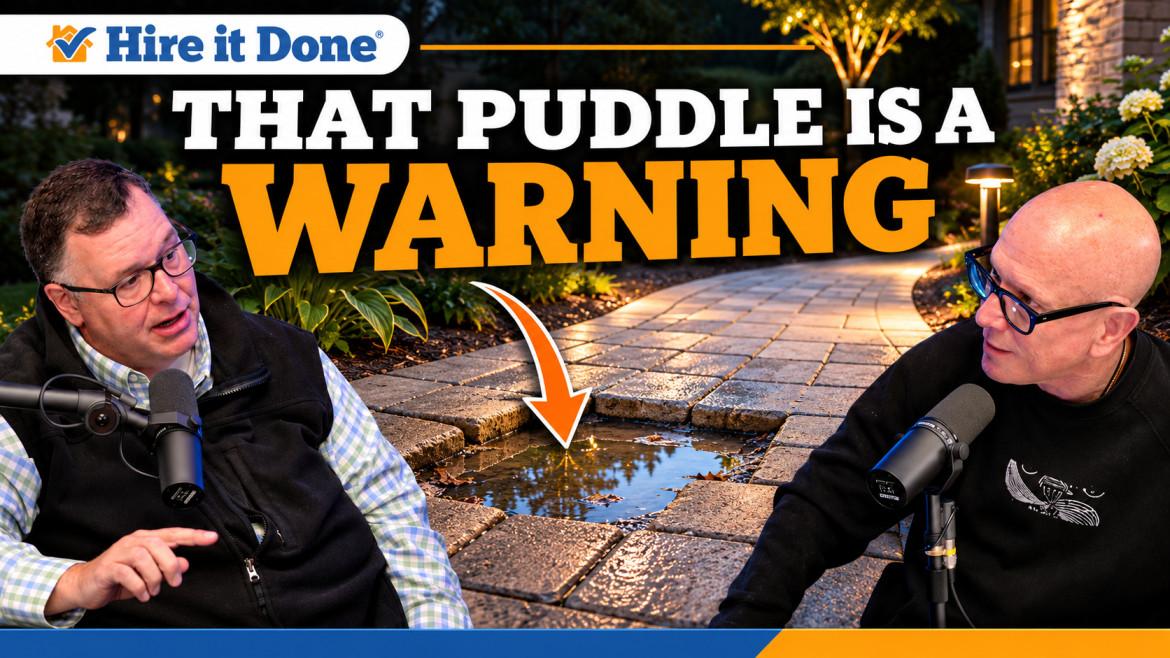

Your brick patio may still look good, but the puddle that forms after every storm is telling you something has changed. Pavers can settle unevenly over time. When an area starts holding water, the problem may involve what is underneath the surface, not just the appearance of the brick.
So should you repair those pavers or replace them? In a recent Hire It Done episode, Adam Helfman asked Jered Baumert of Fresh Cut Lawn and Landscape in Shelby Township the same question about his own property. Jered explained why a small-looking repair can become a significant labor job, and why the smarter choice depends on drainage, materials, and cost.
What Does a Paver Puddle Mean?
Adam described brick pavers that had settled over the years. They still looked attractive, but a low spot held water when it rained. He did not want to pull them all out if he could avoid it.
Jered's response was practical. When a paver area has slumped, the affected section may need to be lifted and relaid. The visible dip is only part of the problem. The supporting base and the way water moves through it also deserve attention.
Why Old Pavers Can Be Difficult to Repair
The obvious repair sounds simple: lift the low bricks, level the base, and reinstall them. The actual work can be more complicated.
Jered described the time required to pull pavers up, clean them, and prepare them to be set back in place. Old polymeric sand and material packed into the joints can make that labor intensive. Some pavers may also have wear or damage from years of use.
The price of repair therefore includes much more than the visible number of bricks. There is removal, careful cleaning, preparation, adjustment to the base, relaying, and finishing the joints again. Equipment access and the overall condition of the patio can influence the job.
When Replacement May Be Worth Comparing
Jered said there are cases where the amount of labor required to clean and reinstall old pavers approaches the cost of a new installation. That does not make replacement the automatic answer. It makes it a serious option to compare.
Ask the contractor for two clearly described proposals. One should cover restoring the existing pavers and addressing the base. The other should explain replacement materials, base preparation, and the new installation.
Compare scopes, not just totals. Ask whether each quote actually corrects the drainage problem.
A lower bid is not the better choice if it leaves the underlying problem untouched.
Why Matching Pavers Still Matters
There are times when repairing an older area has advantages even if the labor cost is not dramatically lower.
Jered pointed out that a homeowner may have the same pavers elsewhere in the yard. If that product is no longer available, preserving the existing material can help keep the whole property looking consistent.
Ask whether the original pavers can be reused successfully and whether replacement units are still available. If matching is important to you, say that early. The contractor can then present a fair comparison of repair, partial replacement, and a complete redesign.
The Base Matters More Than the Label
Later in the episode, Adam asked Jered about newer ways of installing pavers in Michigan. Jered discussed changes toward open-grade base materials and clean limestone bedding that allow water to move through rather than trapping it.
The conversation did not establish one universal base specification for every project. Soil conditions, site grading, intended use, and the local climate all matter. However, it did highlight an important question for homeowners: where does the water go after it reaches the paver surface?
Jered used the word “permeable” to describe the approach he was discussing. For your project, ask the installer what base materials they propose, how they will manage runoff and drainage, and whether the joint material is compatible with the design.
A beautiful new paver does little good if the installation below it fails to support it.
Ask About Grading and Joint Materials
When a patio or walkway sinks, it is easy to concentrate on the visible surface. Make sure the proposal also covers how the repaired area will meet the surrounding grade and how water will move away from places where it should not collect.
The transcript includes a discussion of newer polymeric sand products that may allow water through in suitable systems. That does not mean every bag of joint sand behaves the same way, or that changing the joint material alone solves a settled base.
Ask which base and joint materials suit your site and why.
Choose an Installer Who Can Show Results
Near the end of the show, Jered shared one of his preferred ways of helping homeowners decide whether to hire his company. He calls it a “field trip.” He shows prospective customers completed projects that are similar to what they want and gives them opportunities to talk with previous clients.
That is a smart practice for paver work. A newly installed patio can look great in a photograph. A finished project that has been used and exposed to the seasons may tell you more about installation quality.
Ask for examples that resemble your property and, if appropriate, references you can contact. Ask how the company handles repairs, workmanship concerns, and changes discovered during excavation. You want to know the crew understands the job below the surface as well as the design on top.
Frequently Asked Questions
 Why are my brick pavers sinking?
Pavers can settle when the supporting base or bedding changes over time. A contractor should inspect the affected area and its drainage before recommending a permanent fix.
Do puddles mean my patio needs replacement?
Not always. Localized settling may be repairable, but widespread problems or expensive labor can make replacement worth comparing. Ask for both scopes in writing.
Can sinking pavers be lifted and relaid?
Yes, that is one possible repair method Jered discussed. The condition of the pavers, old joint material, and base all affect how much work is required.
Is repairing pavers cheaper than installing new ones?
Sometimes. Cleaning, removing, and relaying old pavers can be labor intensive, so the cost can approach replacement in some situations. Compare actual quotes for your property.
What if my original paver is discontinued?
Reusing existing pavers may help maintain a match with other areas. Ask your contractor whether enough sound material can be saved for the repair.
Does polymeric sand fix sinking pavers?
Joint material helps finish a paver system, but it does not replace correcting a settled supporting base. Ask the installer to address the underlying issue first.
What is a permeable paver base?
In this episode, Jered described an open-grade stone approach intended to let water move through the system. The proper design depends on your site, materials, and intended use.
Should I pressure-wash pavers before repair?
Cleaning may be part of preparation, but the method and timing should fit the condition of the material and joints. Let the contractor explain the proposed process rather than assuming washing will correct a low spot.
What should a paver repair quote include?
Request details on removal, material reuse, base correction, grading, joint materials, disposal, and cleanup. Also ask what conditions could change the estimate once the area is opened up.
The Smartest Next Step
If your pavers are holding water, do not rush to buy new bricks or pay for a cosmetic refresh. Get an experienced installer to assess why the area is sinking. Ask for a clear repair proposal and a replacement option where appropriate.
The best result is not simply the least expensive-looking paver. As Adam put it on the show, “The best brick paver is the one that's installed properly.” Make the base, drainage, and workmanship part of the decision before the next storm arrives.
Tags: