



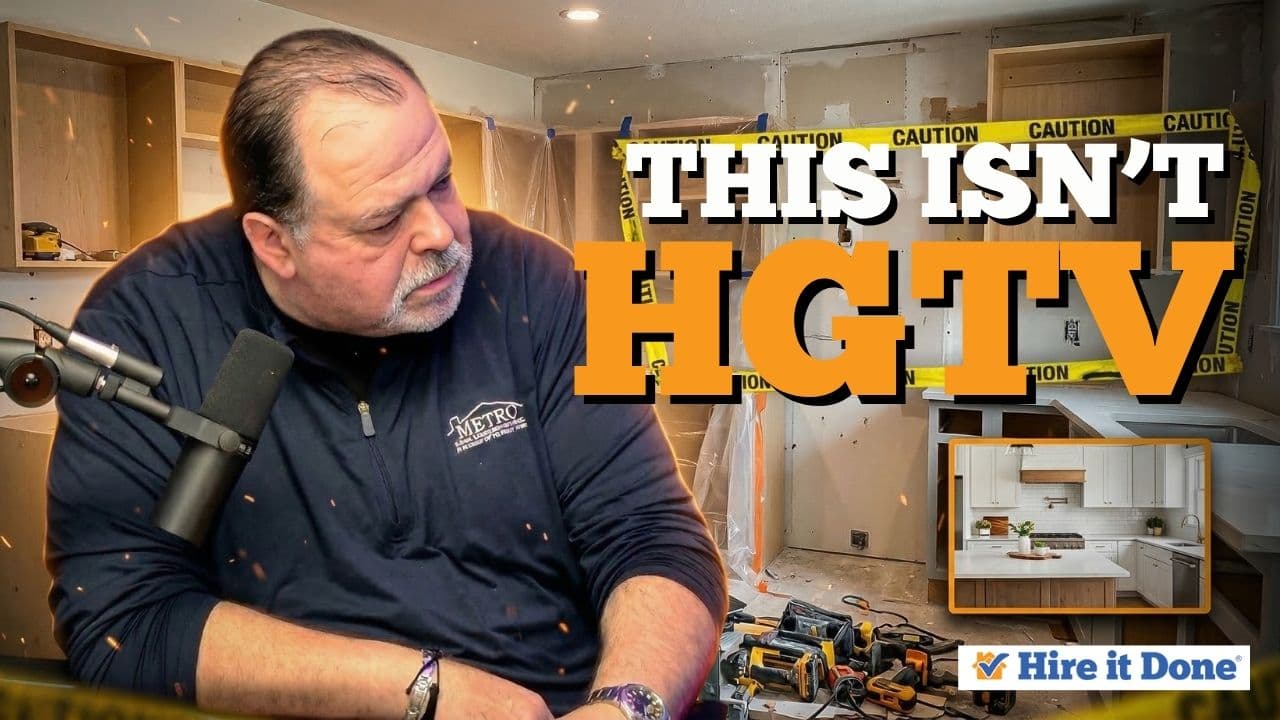

If you are planning a kitchen remodel or kitchen addition in Southeast Michigan, you need more than design ideas and inspiration photos. You need a real plan. That was one of the clearest takeaways from a recent Hire It Done episode featuring Brian Lee of Metro Home Improvements, where he broke down what homeowners often get wrong before a remodel even starts.
And right now, this matters more than ever.
Many homeowners in SE Michigan are staying put instead of moving. With mortgage rates still much higher than the 2% to 4% loans many people already have, remodeling feels smarter than buying a new house. Brian Lee confirmed that he is seeing more demand for kitchens, bathroom transformations, basements, pergolas, and additions because people want more usable space without giving up the home they already love.
But that does not mean you should jump in blindly.
A major kitchen remodel can improve how you live every day. It can also become a stressful, expensive mess if you do not prepare the right way. The good news is that you can avoid many of the most common problems if you understand what is really involved before demo day begins.
Why More SE Michigan Homeowners Are Remodeling
If you have thought about moving but stopped when you saw today’s rates, you are not alone.
That exact trend came up in the episode. Instead of taking on a more expensive mortgage and starting over with a new property that may not even have landscaping, a patio, a deck, or finished outdoor living space, many homeowners are choosing to improve what they already have. Brian Lee said he is seeing strong demand for kitchens and additions because people need more space and more function from their current homes.
That makes a lot of sense in Southeast Michigan.
You may love your neighborhood, your lot, your school district, or your commute. A remodel lets you keep those advantages while upgrading the part of the home you use most.
Start With Clarity Before You Call a Contractor
One of Brian’s strongest points was simple: do not wait around in “contemplation mode.”
He said, “Take a pen and a pad of paper, sit down, and write out exactly what you’re looking for. Contemplation is going to lead you to paying more down the road.” That is advice every homeowner should take seriously.
Before you call a contractor, get clear on three things.
1. Know What You Want to Achieve
You do not need full blueprints yet. But you should know the outcome you want.
Do you need more storage? Better flow? Room for entertaining? A larger footprint? A more functional layout for a family of four?
If you cannot explain your goals clearly, you make it harder for your contractor to guide you well.
2. Build a Realistic Budget
This is where many homeowners get caught off guard.
Brian explained that quality remodels often involve custom or semi-custom materials sourced from cabinet distributors and tile suppliers, not bargain products grabbed off a shelf. That does not mean you need the most expensive finishes possible. It does mean you need to budget based on the level of quality and longevity you actually want.
A realistic budget also needs some breathing room.
Material costs have not gone down the way many homeowners hoped. In the episode, Brian said lumber was still rising and had recently increased again, with another spike expected. If you delay too long, your project may simply cost more later.
3. Prepare for the Inconvenience
A kitchen remodel disrupts your routine. You will not just “work around it” without planning.
Brian made this point clearly. If your kitchen is under construction, you may need to grill outside, eat more takeout than you want, or set up a temporary food prep area elsewhere in the house. If someone in your family has food allergies, diabetes, or other dietary needs, you need to tell your contractor early so you can plan around that. As he put it, “People don’t plan to fail. They just fail to plan.”
Set Real Expectations for the Timeline
This is one of the most important parts of the whole process.
Many homeowners imagine a quick turnaround. But Brian gave a real-world example of a homeowner expecting six to eight weeks for a kitchen addition and remodel when the realistic timeline was more like 20 to 26 weeks.
That gap matters.
A true remodel is not just demolition and installation. It often involves:
Design and Architectural Planning
If you are adding space, an architect may need to draw the addition and turn the approved design into plans.
Pre-Construction Meetings
Brian described sitting down with the homeowner to review the plans, redline changes, and prepare for permits before work begins. That step helps reduce costly mistakes later.
Permits and Inspections
These can affect timing more than homeowners expect. Cities can require corrections, additional work, or updated interpretations based on local code enforcement.
Framing, Mechanicals, and Rough Ins
Cabinets do not come first. Brian said he does not order cabinets until the space is framed, the mechanicals are in, and he knows exactly where plumbing, electrical, and HVAC will land. That prevents expensive reorders if something shifts in the layout.
If your contractor promises a huge remodel with no inconvenience and no delays, that should raise a red flag.
Plan for Hidden Costs Before They Become a Problem
One of the most helpful parts of the episode was the honest discussion around budget busters.
Some extra costs happen because homeowners upgrade finishes mid-project. Others come from hidden structural conditions no contractor can fully see before demolition.
Brian gave one example where a floor looked straightforward until tear-out revealed leveling issues created by a previous owner. Once the old materials came out, the team had to inspect joists, correct the slope, and re-level the area before new flooring could go in properly.
That is why smart contracts matter.
Brian explained that he uses a provision allowing for a plus or minus 15% adjustment if hidden issues are uncovered and need to be corrected so the work can be done properly. That is not a trick. That is a practical safeguard when you are dealing with what is behind walls, under floors, or buried beneath older finishes.
You should also understand that design choices can change labor costs.
For example, a tile upgrade is not just about paying more per square foot. If you choose a more complex tile size, herringbone layout, or pattern install, labor can go up too. That should be discussed before the material is ordered, not after.
Communication Can Make or Break the Project
If you want a smoother remodel, stay in close contact with your contractor.
Brian said the communication line needs to stay open, especially when there are material delays, special orders, code issues, or timeline changes. Homeowners get anxious in the middle of a project. That is normal. But anxiety gets worse when nobody explains what is happening.
According to Brian, the three biggest concerns homeowners usually have mid-project are:
Are We Still on Track?
You want to know whether the job will still finish close to the timeline discussed.
Are We Still on Budget?
Even when you start with a clear contract, hidden conditions and product changes can create pressure.
Will It Be Done Before a Party, Holiday, or Family Gathering?
This one is more emotional than many people realize. Homeowners want to enjoy the finished space, show it off, and use it for real life.
A trustworthy contractor does not avoid those conversations. They have them early and often.
Know What “Done” Actually Means
At the end of the project, do not confuse a punch list with a major failure.
Brian said every job has a punch list. That could mean a missing piece of molding, a damaged cabinet door, or a small finish item that still needs to be corrected. The key is being fair. If the remaining items are worth a few hundred dollars, it is not reasonable to hold back thousands in final payment. He suggested holding back an amount that reflects the real remaining value, often with a signed list showing what is left and what amount is being withheld until it is completed.
That is the kind of process that protects both sides.
It is also worth paying attention to warranty coverage. In the episode, Brian said Metro Home Improvements provides a written five-year labor guarantee, which goes well beyond the one-year minimum homeowners often expect. He also made an important point: if something goes wrong, call the original contractor first. If someone else touches the work, that can void the warranty.
The Bottom Line for Homeowners
If you are planning a kitchen remodel in SE Michigan, excitement is not enough. You need clarity, budget discipline, realistic expectations, and steady communication.
That was the real message from this recent Hire It Done conversation with Brian Lee of Metro Home Improvements. The best remodeling experiences usually do not happen because everything goes perfectly. They happen because the homeowner and contractor plan honestly, communicate clearly, and solve problems the right way when they show up.
If you do that, you give yourself a much better shot at ending up with a kitchen that works beautifully, lasts for years, and feels worth every dollar you invested.
Tags: