




A contractor dispute rarely starts with a lawsuit. It usually starts with something ordinary.
A missed date.
A phone call that ends badly.
A change order nobody remembers approving.
A promise to fix something “next week.”
Then the project keeps moving, the details pile up, and both sides remember the story differently.
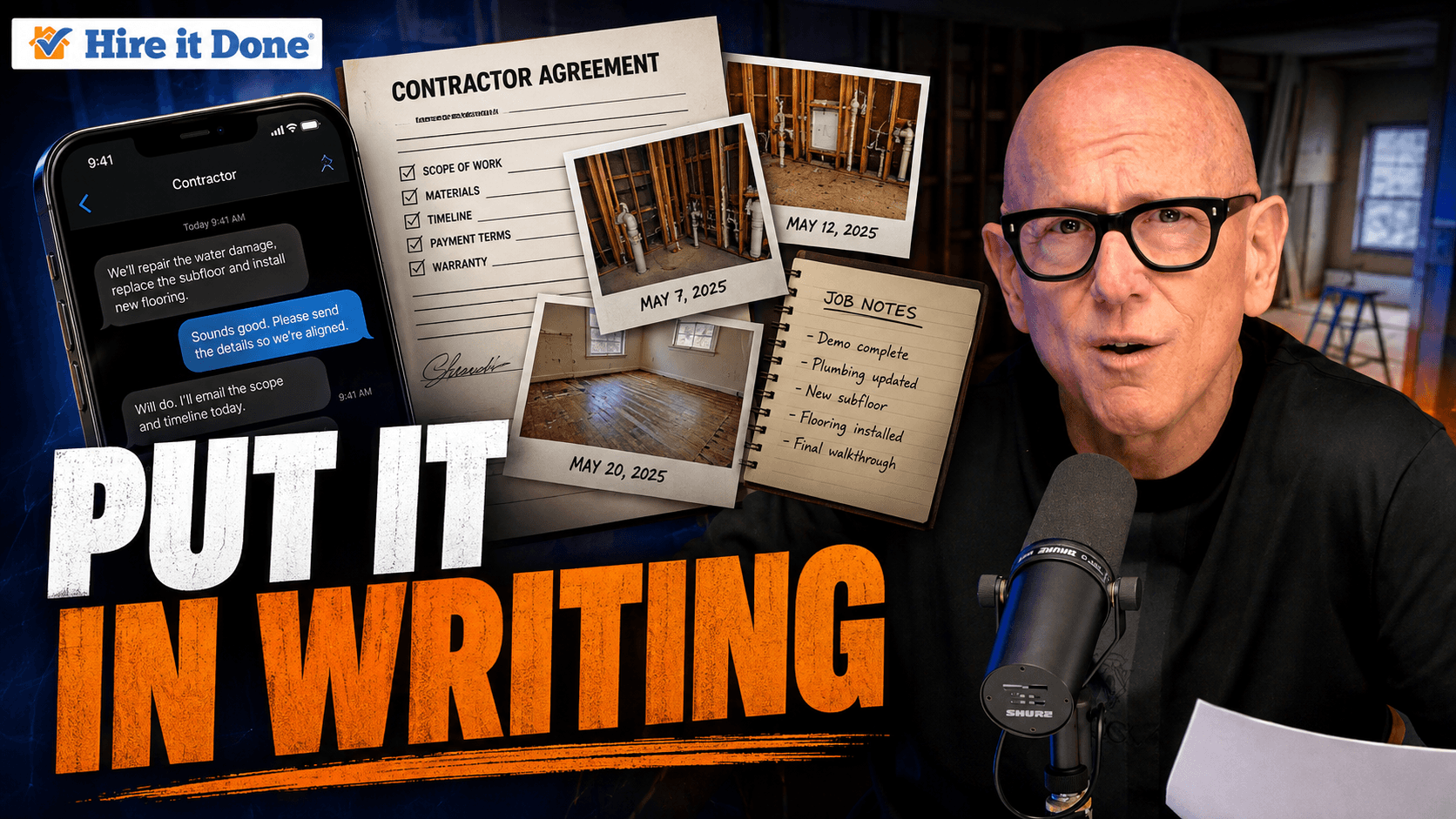
In a recent Hire It Done episode, Adam Helfman repeated one homeowner lesson again and again: document everything. The goal is not to create a mountain of paperwork. It is to create a simple, reliable timeline of what happened on your project.
Good records can help you resolve a problem earlier, explain a dispute clearly, and know when it is time to bring in a professional.
Start With the Contract
Your documentation should begin with the agreement you signed.
Keep the contract, proposal, scope of work, payment schedule, plans, specifications, and terms in one folder. Save every written change to that original agreement.
When a problem comes up, compare it with the contract.
If the contractor misses a milestone, what did the schedule actually say?
If there is a billing dispute, what does the payment schedule require?
If extra work was performed, was there a written change order?
A good project record connects the disagreement to something specific instead of relying on a general feeling that the job is going badly.
Save Every Important Message
Texts and emails can become the day-to-day history of the project.
Do not delete the message where the contractor changed the schedule. Save the email where you asked about unfinished work. Keep the text confirming that a repair would be completed on Friday.
If an important decision happens in a group text, screenshot or export it so you have your own copy.
Try to keep communication professional even when you are frustrated. Short, factual messages are easier to understand later than emotional paragraphs sent in the middle of an argument.
Recap Phone Calls in Writing
Some of the most important contractor conversations happen by phone or face to face.
That is fine. Just create a written recap afterward.
Adam's example is simple:
“Per our conversation today, I wanted to recap what we discussed and what's still left to do.”
Then list the key points.
What did the contractor promise to complete?
What did you agree to provide?
Was a payment discussed?
Did the schedule change?
Was a defect supposed to be corrected?
End by asking the contractor to let you know if you missed anything.
That small habit can prevent a later argument about what the conversation meant.
Take Dated Photos and Video
Photos are useful when they show context, not just a close-up of something you dislike.
Take wide shots of the room or work area. Then take closer photos of the specific issue. Photograph unfinished work, damage, deliveries, materials, and jobsite conditions.
Video can be useful for showing leaks, movement, noise, or a sequence that a still photo cannot explain.
Keep the original files when possible so the date information remains available. Organize the images by room, phase, or date so you can find them later.
Keep a Simple Job Log
You do not need complicated software.
A notebook, spreadsheet, notes app, or project folder can work.
For each important day, record:
Who showed up?
What work was completed?
What work was not completed?
Were materials delivered?
Was an inspection scheduled or failed?
Was there a delay?
What promise was made next?
This running job log becomes especially valuable on long remodels where dozens of small events blur together.
 Organize Receipts and Payments
Money disputes get harder when the payment record is incomplete.
Save invoices, receipts, payment records, and change orders.
If you buy materials directly, photograph the receipt and label what it was for. Adam suggests simple descriptions such as cabinet delivery or kitchen rough so you can recognize the expense later.
For projects involving subcontractors, ask about lien waivers where appropriate. A payment to the general contractor does not automatically tell you whether every trade has been paid.
Document the Problem Specifically
Avoid writing, “The contractor is doing a terrible job.”
That is an opinion.
Write what actually happened.
“The countertop installation was scheduled for Friday and did not occur.”
“The invoice includes work from a change order I did not approve.”
“The leak reported on August 5 has not been repaired.”
“The inspection failed and I have not received a correction plan.”
Specific documentation gives the contractor a fair chance to respond and makes the problem easier for another professional to review.
Know When Records Need Help
Documentation is not a substitute for legal advice.
If the dispute involves a lien, a structural or safety defect, unresolved code problems, failed inspections, arbitration, or a significant financial claim, take the file you built to a qualified professional.
The better organized the record is, the easier it is for that person to understand the project.
Your goal is not to create evidence for a fight from day one. Your goal is to keep the project clear enough that a disagreement does not depend on two different memories.
Frequently Asked Questions
What should I document on a remodeling project?
Keep the contract, scope, change orders, invoices, payment records, texts, emails, dated photos, videos, inspection records, receipts, and a simple job log. Focus on records that show what was agreed to, what changed, and what actually happened.
Should I text or email my contractor?
Either can be useful for routine communication. For important decisions, deadlines, scope changes, payment issues, or dispute points, make sure the agreement is captured clearly in writing and saved.
Should I record every phone call?
The episode does not recommend relying on a phone call alone. Adam's practical approach is to send a written recap after the conversation and ask the contractor to correct anything you misunderstood.
How often should I take jobsite photos?
Take photos at major stages, before work is covered up, after important installations, and whenever a problem appears. Dated progress photos are much more useful than trying to recreate the timeline after the dispute starts.
What should a contractor job log include?
Record who was onsite, what work was completed, delays, deliveries, inspections, promises, and important conversations. Keep it short enough that you will actually maintain it.
Do I need written change orders?
Written change orders are one of the clearest ways to document changes to scope, price, or schedule. If the project changes, make sure both sides understand what changed before the extra work becomes another dispute.
Should I keep receipts after paying a contractor?
Yes. Keep receipts and proof of payment for the project. They can help you reconcile the final balance, track owner-purchased materials, and explain what has already been paid.
When should I contact a lawyer?
Get qualified legal advice when you are dealing with liens, serious safety or structural issues, unresolved code or inspection problems, arbitration clauses, or a financial dispute you cannot confidently resolve from the contract and project records.
Build the File Before You Need It
The best time to document a contractor dispute is before it becomes one.
Save the messages while they are fresh. Recap the calls. Take the photos. Keep the receipts. Write down the schedule changes and promises.
Most of this takes only a few minutes at a time.
If the project stays healthy, you still have a clean record of your renovation. If the relationship breaks down, you are not trying to reconstruct months of work from memory.
Tags: