




If you are thinking about getting a generator, one of the first questions you probably have is simple: What size generator do I actually need?
That sounds like it should have a quick answer. It doesn’t.
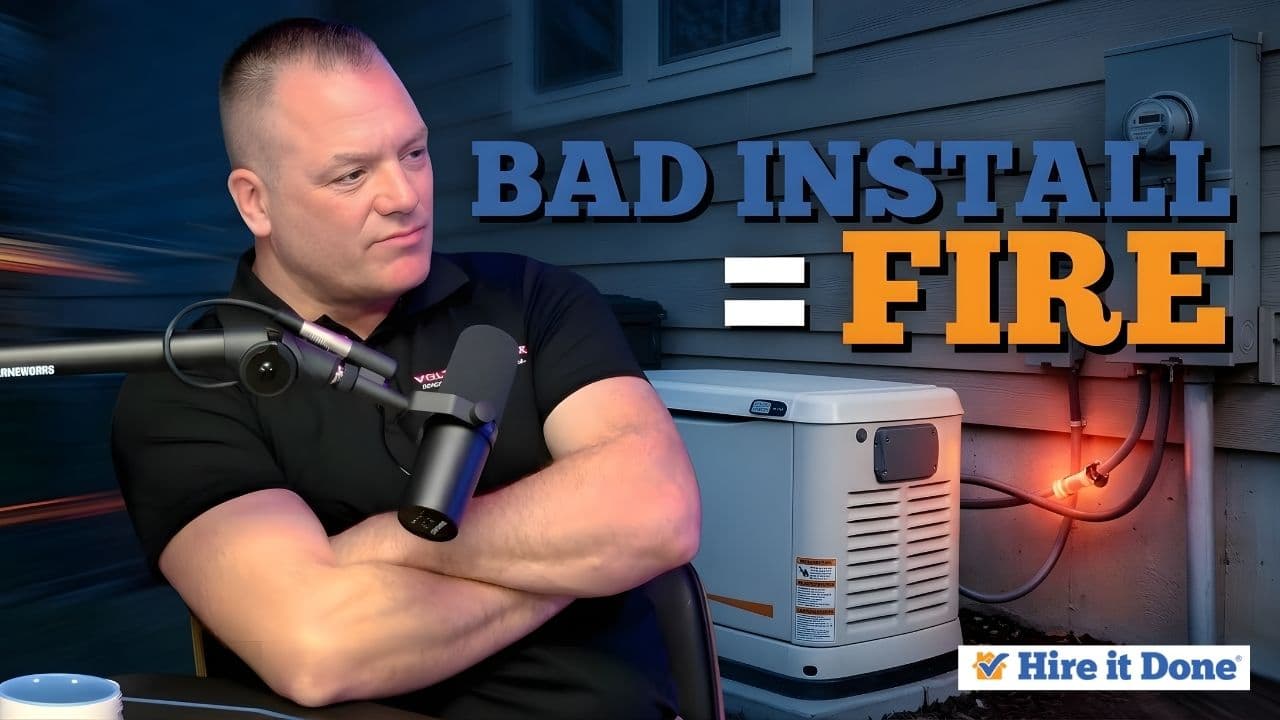
The right generator size depends on how you live, what you want powered during an outage, and whether you want bare-minimum backup or true whole-house protection. That was one of the most practical takeaways from a recent Hire It Done episode featuring Josh Young of Voltron Power, a licensed and insured electrical contractor serving Oakland County, Metro Detroit, and the surrounding area. In the episode, he broke generator sizing down in a way that makes sense for real homeowners, not just electricians.
And that matters right now.
In Southeast Michigan, power outages are not rare little inconveniences anymore. When the grid goes down, you are suddenly thinking about your sump pump, your furnace, your fridge, your freezer, and whether your house can stay safe and functional for the next day or two. That is why choosing the right generator size is not just about watts. It is about peace of mind.
Start With What Must Stay On
The smartest way to size a generator is not to start with the generator itself.
Start with your house.
Josh explained that when Voltron Power quotes a generator, they first make a house visit and figure out the circuits you want backed up — what he called your critical circuits. That is the real starting point. Not the brand. Not the sale flyer. Not whatever unit happens to be sitting at a big box store.
For most homeowners, critical circuits include:
- Furnace
- Sump pump
- Refrigerator
- Freezer
- Microwave
- A few lights and outlets
- Possibly garage door access or internet equipment
Those are the systems that protect your home and keep your family comfortable during an outage. If your main goal is to keep the essentials running, your sizing decision will look very different than if you want the whole house to operate almost normally.
That distinction is everything.
Because once you know whether you want essentials only or whole-house performance, the sizing conversation gets much easier.
Look at Your Biggest Electrical Loads
One of the best points Josh made in the episode was this: when they calculate the appropriate load for a generator, they usually start with the 220-volt appliances first. That is because those are the items that create the biggest electrical draw.
That means things like:
- Electric dryer
- Central air conditioner
- Electric stove
- EV charger
Those heavier loads can quickly push you into a larger generator category. So if you want your home to run more like normal during an outage, you have to account for those appliances honestly.
This is where a lot of homeowners get tripped up.
You may say you “just want backup power,” but what you really mean could be one of two very different things:
- You want the house protected from damage and discomfort
- You want to keep using the house almost exactly the way you normally do
Those are not the same thing.
If you only care about keeping your furnace, sump pump, fridge, and freezer running, you can often go much smaller. But if you want your central air, electric cooking, and larger appliances all available at once, you need more amperage and more wattage. As Josh put it, if you want to use all your appliances at the same time, you are going to want a higher-amperage, higher-wattage generator.
 What a Small Generator Can Handle
In the episode, Adam Helfman asked Josh to walk through a common Southeast Michigan scenario: a roughly 2,000-square-foot home with a 100-amp service where the homeowner wants the bare minimum covered during an outage. Josh’s answer was very clear.
He said the smallest unit he would recommend in that situation is roughly a 10,000- to 11,000-watt generator. That size would typically cover the basics in an emergency, including the furnace, sump pump, fridge, freezer, and microwave. He also made it clear what that size would not do: it would not power an electric stove or central air conditioner.
That is a really useful benchmark for homeowners.
If your goal is simply to protect the essentials and avoid the biggest pain points of an outage, a smaller standby generator may be enough. But you have to be honest about your expectations. If you buy a basic system and then expect it to run your full house like nothing happened, you are going to be disappointed.
Generator sizing is really about lifestyle expectations during a blackout.
When Whole-House Sizing Makes More Sense
Now here is where the conversation gets more interesting.
Josh also pointed out that in many cases, it is actually more advantageous to go with a whole-house unit because the cost difference between a lower-wattage generator and a higher-wattage generator is often not that dramatic when you look at the total installation cost.
That is a big deal.
A lot of homeowners focus only on the price jump between units, but the generator itself is only one part of the total project. You are also paying for labor, electrical work, transfer equipment, gas coordination, permits, and inspections. So if you are already making the investment, going a little bigger may give you far better day-to-day usability when the power goes out.
That does not mean everyone should automatically buy the biggest unit possible.
It means you should think carefully about what you will wish you had powered on the worst day of the year.
If you lose power during a summer heat wave and your central air is down, will that bother you? If the power goes out during a winter storm, do you just need heat and refrigeration, or do you also want cooking flexibility and the rest of the home functioning normally? If you work from home, do you need a more complete backup setup?
Those questions help you size smarter than any generic chart ever will.
Do Not Guess From the Store Tag
Another smart point from the episode was the warning against reading a store label and assuming you have the full story.
Adam brought up the portable generator you see on sale at a big box store that says 12kW on the label. Josh immediately noted that you start getting into fuzzy math with watts, running watts, and startup loads. In other words, the number on the box does not automatically mean the generator will perform the way you think it will.
That is why sizing should not happen in a vacuum.
A real quote should look at your service, your panel, your appliances, your goals, and how you want the home to perform during an outage. It should also factor in how the generator will connect to your house safely. Josh stressed that portable generators still need to be hooked up the right way if you want to power parts of your electrical panel.
So before you buy based on sticker numbers alone, get a contractor to walk the house and map out the right path.
That one step can save you from buying too small, overspending on the wrong unit, or ending up with a system that never really matches your needs.
Your Gas Supply Matters Too
Here is another thing many homeowners miss when thinking about generator size: the bigger the output, the more your gas setup matters.
Josh explained that a generator’s gas consumption is directly related to its electrical output. The more electricity you are asking it to produce, the more gas it is going to pull. If your meter has not been upgraded and you are pushing a larger unit hard, you can end up starving the generator.
He also shared that in most cases, the fix is not changing the line from the street. It is usually increasing the meter size through the utility, which he said often costs clients around $600 to $800.
That means generator sizing is not just about the electrical side. It also affects the gas side of the project.
So if you are considering a larger whole-house generator, make sure your contractor evaluates the gas meter and supply early. Otherwise, your “bigger and better” setup may end up delayed or limited.
 Choose the Right Size With the Right Contractor
The best part of this recent Hire It Done conversation is that it did not turn generator sizing into a guessing game. It made the process simple.
You start with your critical circuits. You identify your biggest electrical draws. You decide whether you want emergency basics or whole-house comfort. Then you have a qualified contractor design the right system around your actual home.
That is exactly why Josh Young of Voltron Power came across as such a helpful guest in this episode. He did not oversimplify the decision, but he also did not make it confusing. He gave homeowners a practical road map.
And if you remember just one thing, make it this:
The right generator size is not the biggest one you can afford. It is the one that matches how you want your home to function when the power goes out.
If you get that part right, everything else gets easier.
Tags: