




A home generator is supposed to make a power outage less stressful. But buying the equipment without planning the electrical connection, available fuel, and loads you need to support can create a different kind of problem. You may end up with a generator that cannot run the equipment you expected, or a project that needs more work than the original conversation covered.
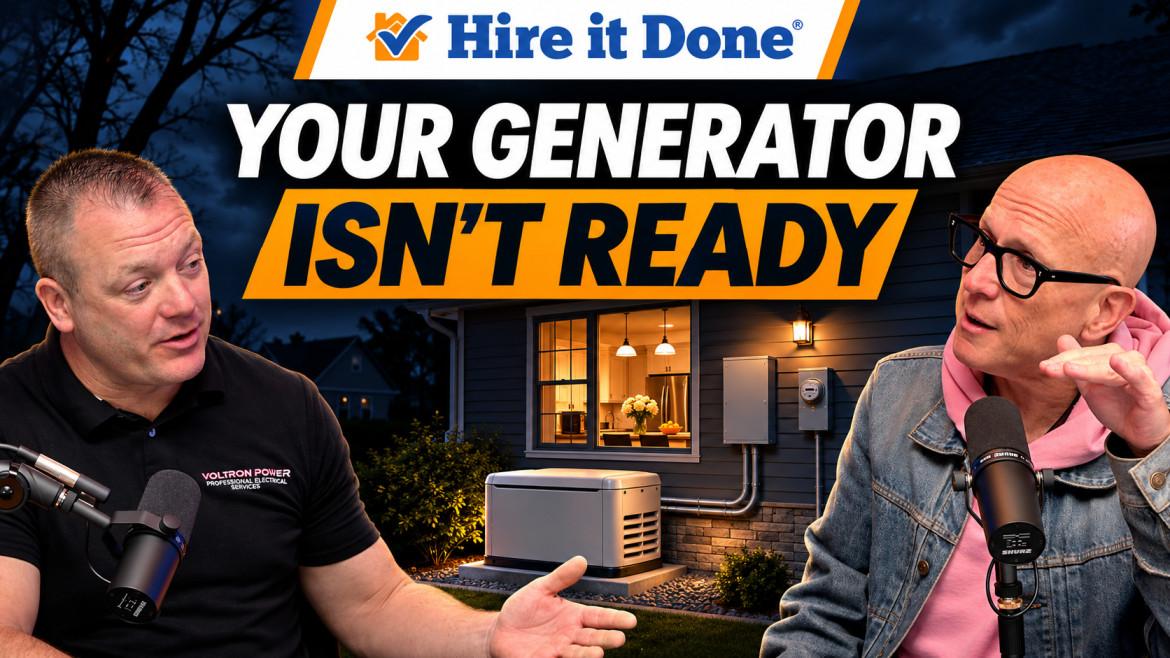
In a recent Hire It Done radio episode, Adam Helfman spoke with Josh Young of Voltron Power about the decisions homeowners should make before buying portable or standby backup power. Josh is an experienced electrical contractor who installs generators and other residential electrical systems. His advice comes back to one idea: understand the house before choosing the machine.
Which Home Essentials Need Backup Power?
Start with the things your household cannot comfortably lose during an outage. Adam and Josh discussed a refrigerator, sump pump, furnace, and the ability to keep important communications powered. That is a more useful starting point than asking for the biggest generator available.
Your list may be different from your neighbor's. A basement with a sump pump has a different priority from a home without one. A household that depends on electrical equipment or needs a working home office should mention that during the consultation. The goal is to identify the circuits that really matter, rather than treating every outlet and appliance as equally important.
List priorities before the electrician arrives. This helps you discuss what the proposed generator can actually support, especially when only selected circuits receive backup power.
Portable or Standby Generator: What's Different?
Josh explained that there are safe, code-compliant ways to connect a portable generator to a house. One arrangement uses separate transfer equipment serving a defined group of circuits. Another uses appropriate panel equipment and a lockout arrangement, with the homeowner responsible for managing which loads are on.
The crucial distinction is that portable backup is manually operated in the scenarios Josh described. It is not the same as a permanently installed automatic standby system. A portable generator can provide valuable backup power, but it still takes a plan for which appliances and circuits to use.
A standby generator is a different installation project. It involves choosing a location, evaluating the electrical service, planning fuel supply, coordinating contractors, and arranging the appropriate testing and service. Ask your electrician to explain the specific equipment and how the system will operate when utility power fails and returns.
Why Safe Generator Connections Matter
One of the most important parts of Adam and Josh's discussion was what happens when generator electricity reaches the home's wiring. The connection must be designed to prevent power from flowing back toward the utility supply. Josh identified transfer equipment as part of the safe approach.
This is not a place to improvise with plugs or wiring. Ask a qualified electrician which connection method fits your home's service panel and the circuits you want to back up. The electrician can explain the appropriate equipment, installation requirements, and how to operate it correctly.
For a homeowner, the practical question is simple: "When the grid is down, exactly how does this system keep backup power separated from utility power?" You should get an understandable answer before any equipment is installed.
Understand What Your Electrical Panel Shows
A breaker panel can look intimidating because it contains many switches carrying different amperage ratings. Josh made an important distinction: you cannot simply add all those breaker ratings to calculate your home's actual electricity demand.
He also separated small electronics from larger electrical loads. Televisions, gaming systems, and cell phone chargers are not necessarily the main drivers of household electrical demand. Central air conditioning and EV chargers can matter much more when determining what a generator needs to support.
This is another reason to resist sizing the generator on a single visible number. An electrician needs to assess the loads that may run at the same time, the intended backup circuits, and how the system will be used. A panel label is information, not a complete generator design.
Plan for Future Electrical Upgrades
The generator you choose should fit the home you expect to have, not only the home you have today. Josh said that during his consultation he asks homeowners whether they might later add an EV charger, hot tub, or another high-demand feature.
This is a valuable contractor habit. Electrical needs change as households renovate, replace equipment, or add features. If you size the generator precisely for today's equipment without discussing future demand, you may regret that decision after the next project.
You do not automatically need the biggest generator. Budget matters. Ask a contractor to explain the trade-offs against realistic plans for the property.
Adam described this as a difference between selling a generator and recommending something the homeowner can grow into. That is the kind of conversation worth having before you sign a contract.
Why a Generator Quote Needs a Site Visit
Adam asked whether a satellite image or virtual walkthrough could be used to quote a standby generator. Josh pushed back. Pictures alone do not reliably show where the electric service and gas meter are located, or what work may be required to reach the proposed installation area.
Josh also pointed to finished basement ceilings. Running electrical or gas lines through completed spaces may require additional access work. That can change the scope of the project. A photograph of the roof and yard cannot capture every concealed obstacle inside the house.
During an in-person survey, expect questions about your current equipment and future plans. Josh said he wants access to the electrical panel and the perimeter of the house. You can make that visit more productive by clearing safe access to those areas and explaining any proposed remodels.
"I don't want them to guess," Josh said about relying on homeowners to supply technical installation information. The responsibility for evaluating the site belongs with the professional.
Could the Gas Meter Need Upgrading?
A standby generator that runs on natural gas must have sufficient fuel available when it is operating. Josh explained that different generator models have different gas requirements. As the generator supplies more electrical demand, its gas use can increase.
That means the home's existing gas meter may need a review. Josh described giving customers the generator's fuel-demand information so they can check with the gas utility about meter capacity. In some cases, the utility may need to upgrade the meter, which can affect the installation timeline.
This should be discussed before the project is scheduled. Ask who will provide the equipment's fuel specifications, who will contact the utility, whether the meter is sufficient, and what happens if an upgrade is delayed. Your electrician and the gas professionals can coordinate the technical details. You should understand the responsibilities and timing.
Don't Treat Maintenance as an Afterthought
A generator needs attention even when it sits unused. Josh discussed planned service, exercise runs, and maintenance after extended outages.
He compared generator care to maintaining a car. Equipment that runs for a long stretch should not simply be forgotten when normal electricity returns. Ask the installer what the manufacturer recommends for servicing, inspections, oil changes, filters, and exercising the system between outages.
Also confirm who provides that service. The company that installs the generator may work with a separate maintenance provider. A good proposal should make it clear whom you contact if the system reports a fault or needs attention.
Questions to Ask Before Signing
Before you approve the installation, ask the contractor to walk you through a few practical points. Which circuits or appliances will the generator support? How was that capacity selected? What future electrical upgrades did the calculation allow for? Which connection equipment will be installed? Where will the generator sit, and how will the electrical and fuel lines reach it?
Ask who coordinates permits, the gas-meter consultation, testing, and maintenance. Compare actual scopes, not only equipment brands or final prices.
A complete quote should help you understand the work. It should not require you to guess which essential steps are included.
Make the Purchase Fit Your Home
Home backup power can be a worthwhile investment, but the right result depends on planning. Prioritize your essential loads, understand portable versus standby operation, insist on a professional site survey, discuss future demand, and clarify the gas and maintenance requirements.
Josh Young of Voltron Power made the case for doing the homework where it belongs: with the experienced contractor. For homeowners, the next step is not to pick a generator from a photograph or a neighbor's recommendation. It is to have an electrician assess the house and explain a backup plan that makes sense for it.
To hear Adam Helfman's full conversation with Josh, watch the Hire It Done Radio EP55 episode:
Learn more at https://hireitdone.com/ and https://voltronpower.com/.
Tags: