



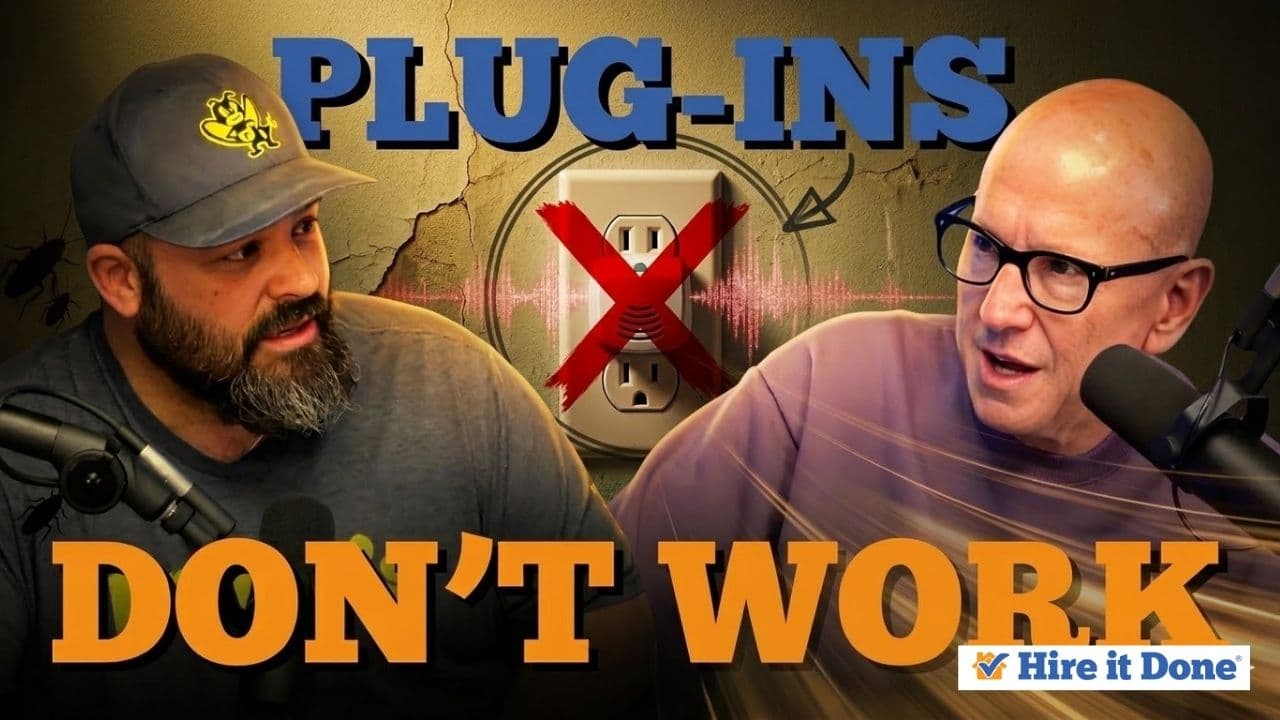

Your house does not come with a warning system for pests. That was one of the smartest points from a recent Hire It Done episode, where Adam Helfman sat down with Derrick Case of Frame’s Pest & Wildlife Control to talk about what homeowners should be checking right now.
Adam’s point was simple: your house has no odometer, no check engine light, and no built-in reminder telling you when it is time for pest control.
If you wait until you see bugs, hear scratching, or find droppings, you are already late.
That is why this conversation matters so much for homeowners in Southeast Michigan. As winter ends and spring starts, pests get active fast. Moles stay active under the snow. Carpenter ants start looking for food. Stink bugs and Asian ladybugs show up around warmth. Rodents keep searching for shelter and can squeeze through shockingly small openings.
Derrick Case of Frame’s Pest & Wildlife Control, a pest control company serving Northern Ohio and Southeastern Michigan for more than 50 years, kept coming back to one big idea: prevention beats reaction. If you want to protect your home, you need to know where pests get in, what signs to watch for, and when to bring in a trusted pro before a small issue turns into damage.
Your House Will Not Warn You Before Pests Get In
Most homeowners treat pest control like an emergency service. They call when they see ants in the kitchen, hear something in the attic, or notice a smell they cannot explain. But that mindset usually costs more, takes longer to solve, and gives pests time to spread.
In the episode, Derrick made it clear that there are really two approaches to pest control: active and reactive. The active approach means you stay ahead of the season. You look for vulnerabilities before pests settle in. You deal with food sources, entry points, and moisture issues before they become a bigger problem. The reactive approach means you wait until the issue is obvious. By then, the pests may already be inside your walls, attic, soffits, vents, crawl space, or yard.
If you own a home in Metro Detroit or anywhere in Southeast Michigan, that should change how you think about spring maintenance. Pest control is not separate from home maintenance. It is part of it.
Start Your Pest Inspection Outside, Not Inside
One of the best practical takeaways from the episode was this: start outside and walk your house. Do not wait for something to show up in your living room.
Derrick said homeowners should look for cracks and crevices, penetrations, wind-damaged areas, loose siding, vents, and buildup around the house. He also called out dryer vents, which often collect lint, warmth, and moisture, all of which can attract activity. On top of that, lawn debris, leaves pushed up against the home, and garbage sitting too long near the structure can all create pest-friendly conditions.
Earlier in the conversation, he also pointed homeowners higher up the house: roof vents, ridge vents, and chimney caps. That matters because many people only think about pests at ground level. In reality, some of the most overlooked access points are above eye level.
So if you want a smart spring checklist, begin here: Check the roofline. Check the vents. Check around siding. Check where utility penetrations enter the home. Check for debris, wet areas, and clutter near the foundation. That is where prevention starts.
 Small Openings Create Big Problems
One of the strongest moments in the episode came when Derrick explained just how little space a rodent needs to enter your home. A mouse, he said, can fit through an opening about the “size of a dime.” That is the kind of detail homeowners remember because it changes your whole perspective.
That means the gap you ignored around a vent, the damaged trim near your siding, or the hollow end cap on the side of your home may be enough. Derrick also pointed out that rodents do not just stay low. They climb well. They can move up the structure, get onto the roof, and enter through ridge vents or other elevated openings. In other words, if your pest prevention plan only focuses on the ground, you are missing a big part of the risk.
This is where professional exclusion matters. Real pest control is not just spraying something and hoping for the best. It is understanding how pests move, where they enter, and how to block them out.
The Early Signs Homeowners Miss Every Spring
A lot of homeowners miss the first signs because they are looking for one dramatic clue. In reality, pest problems often start with subtle patterns.
In the episode, Derrick mentioned mole runs showing up in the yard as snow melts, skunks moving through yards looking for insects, and stink bugs or Asian ladybugs appearing in the house. He also explained that carpenter ants start waking up this time of year and begin searching for food and water, which is why spring is often when homeowners first notice them.
He also made an important point about droppings. If you see them in a guest house, outbuilding, attic, or storage area, do not guess what caused them and do not ignore them. Call right away. That sign alone can point to mice, bats, voles, or something else, and the fix depends on identifying the source correctly.
The big lesson here is simple: if you see activity, the problem may already be established.
Why DIY Pest Control Usually Misses the Real Problem
Homeowners can absolutely buy products at a big box store. Derrick acknowledged that. But he also explained the difference between buying a product and knowing what you are actually looking at. That is the gap most DIY solutions never close.
The episode also touched on ultrasonic pest devices, and Adam flat-out called them “snake oil.” The better line that came out of that exchange was this: test, not guess. That is the mindset homeowners need. If you are serious about protecting your home, you need inspection, diagnosis, and the right treatment or exclusion plan, not a gadget that makes you feel productive.
That is especially true when the issue involves rodents, wildlife, recurring ants, stinging insects, or hidden entry points. The wrong fix wastes money. The right fix starts with finding the source.
 What Smart Southeast Michigan Homeowners Should Do Next
If you take one thing from this recent Hire It Done episode, let it be this: do not wait for a pest problem to announce itself. Walk your property now. Look for the obvious issues. Then take the next step and get a professional inspection if anything looks off or if you want a real roadmap for the year.
That was one of Adam Helfman’s best takeaways from the conversation. A house is a major investment, and pest damage can get expensive fast. Spending a little to prevent a bigger problem later is the smarter move.
For homeowners in Southeast Michigan, this is the right time to act. Before mosquito season ramps up. Before carpenter ants spread. Before rodents turn a tiny opening into a full-blown problem. Before wildlife finds a way into your attic, vents, or roofline.
And if you want help from someone who understands the seasonal patterns, hidden access points, and exclusion work that actually protects a home, the recent Hire It Done conversation made a strong case for calling Derrick Case and the team at Frame’s Pest & Wildlife Control.
Tags: