


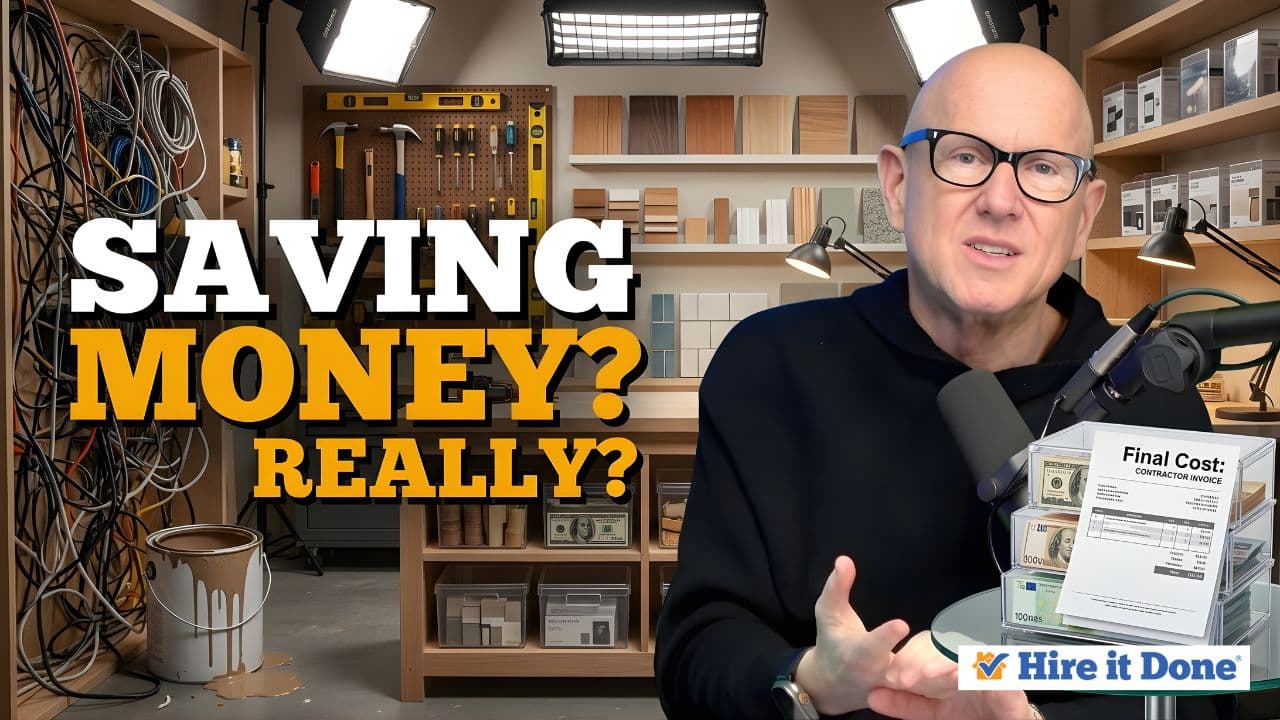

In a recent Hire It Done episode, Adam Helfman tackled a mistake many homeowners make: trying to save money by handling small home repairs themselves, only to end up paying more in the end.
His warning was blunt and practical. He pointed out that “300,000 people in the past few years have gone to the emergency room due to do-it-yourself projects that they didn't do properly.” He also made another point that hits hard: “watching a video doesn't make you qualified.”
If you live in Southeast Michigan, that message matters. Every season brings another round of home maintenance tasks. You hear the smoke detector chirp. You notice cracked caulk around the tub. A door handle punches into drywall. A gutter starts pulling away. A downspout needs replacing. None of these jobs look huge on paper. That is exactly why they fool you.
You tell yourself it will only take ten minutes. You grab a ladder, a razor blade, a caulk gun, or a power tool.
Then the simple job becomes a safety risk, a frustrating half-finished repair, or a bigger bill than you expected.
This is not about telling you to never touch your house. It is about helping you think like a smart homeowner.
The goal is not to prove you can do everything yourself. The goal is to protect your home, your time, your money, and your body.
Why DIY Feels So Cheap
DIY feels affordable because you only compare the visible cost.
You look at the price of a handyman or contractor and compare it to the cost of a battery, a tube of caulk, a patch kit, or a basic tool. On the surface, doing it yourself looks like the cheaper option. That is the trap.
What you often do not count is the full cost of the job. You may need multiple tools. You may make more than one trip to the hardware store. You may damage the surface you are trying to fix. You may install something incorrectly and have to pay someone to redo it.
Worst of all, you may get hurt.
That changes the math fast.
Adam’s point was simple: many homeowners take on DIY work because they think they are saving money, but the savings disappear when the project goes wrong.
Once you add wasted materials, lost time, medical bills, and repair corrections, the “cheap” option often becomes the expensive one.
Simple Repairs Turn Dangerous Fast
The most dangerous jobs are often the ones you underestimate.
Adam used smoke detector battery replacement as the perfect example. You hear the chirp, but you are not even sure which detector is making the noise. One is in the hallway. One is in the bedroom. Another is near the stairs. Eventually, you find it. Then you grab a short ladder and stretch farther than you should.
That is when a small task becomes a hospital visit.
Adam described how quickly it can happen. You reach a little too far. You lose your balance. You fall forward or backward. Suddenly, you are dealing with a broken ankle, twisted joint, or worse.
This is one of the biggest home repair mistakes homeowners make. You do not prepare for the job because the job does not feel serious. But ladders, awkward angles, overhead work, and unstable footing do not care whether the task is “small.”
If you are a homeowner in Metro Detroit or Southeast Michigan, this matters even more during busy maintenance seasons. When your to-do list grows, it gets easier to rush. That is usually when bad decisions happen.
Ladders Are Not Forgiving
A ladder does not give you a warning shot.
If it is too short, you overreach. If it is on uneven ground, it shifts. If you are carrying tools, you lose balance faster. If you are working near stairs, ceilings, or tight corners, your margin for error shrinks.
Many homeowners think, “I can reach it.” That thought causes a lot of trouble.
Adam’s advice in the episode was clear: do not get up on that ladder for something that puts you at risk if a trained handyman can handle it safely. That is not fear-based advice. That is smart decision-making.
You do not have to prove anything by taking unnecessary risks in your own house. A safer home does not come from doing everything yourself. It comes from knowing what you should handle and what you should hand off.
 Small Jobs Should Be Bundled
One of the best practical ideas from the episode was this: stop treating every small repair as a separate crisis.
Instead, walk around your home and make a list.
Write down the chirping smoke detector. Add the cracked caulk around the tub. Add the window caulking that needs attention. Add the drywall repair near the door handle. Add the loose downspout. Add the minor paint touch-ups. Add the small handyman tasks you keep ignoring because none of them feel urgent on their own.
Then bundle them into one service call.
This is one of the smartest ways to manage home maintenance in Southeast Michigan. It saves time. It reduces repeat scheduling. It helps you stay organised. It also lowers the chance that one small issue turns into a larger problem because you kept putting it off.
A tiny caulk failure can lead to moisture damage. A neglected exterior repair can turn into water intrusion. A smoke detector issue can leave part of your home unprotected. Small jobs matter because they connect to larger systems in your home.
YouTube Is Not Jobsite Training
Online videos can be helpful, but they are not the same as experience.
That was another strong point from the episode. Adam pushed back on the idea that watching a quick video makes you ready to tackle a repair. His line was direct: “watching a video doesn't make you qualified.”
That is worth remembering because modern homeowners have access to endless home improvement content. Some of it is useful. Some of it is oversimplified. A lot of it leaves out the context that matters most: safety, prep work, tool quality, hidden damage, code issues, and the small judgment calls professionals make without thinking.
A short video usually shows the clean version of the job. Your home gives you the messy version.
That is why trusted contractors and experienced handymen bring real value. They do not just perform the repair. They spot the issue behind the issue. They see signs of wear, moisture, poor installation, or future failure before you do.
Hire Smarter In Southeast Michigan
A lot of homeowners do not just fear bad repairs. They fear hiring the wrong person.
That anxiety is real, and Adam addressed it directly. He talked about the stress homeowners feel when they think they might get burned by a contractor. That is one reason so many people attempt DIY in the first place. They are not only trying to save money. They are trying to avoid regret.
The smarter answer is not blind DIY. It is better hiring.
When you look for a handyman, electrician, landscaper, or home repair contractor in Southeast Michigan, start with a clear scope. Know what needs to be done. Group related jobs together. Look for experience with the exact type of repair you need. Ask direct questions. Prioritise communication, reputation, and consistency.
The right professional should lower your stress, not raise it.
Protect Your Time And Body
Your home will always need attention. That is normal.
What matters is how you respond.
You do not have to wait for a major renovation to make smart homeownership decisions. Some of the best decisions happen during the small moments: when you hear a chirp, notice a crack, spot worn caulk, or realise a minor fix has been sitting on your list for months.
That is when you decide whether you are chasing a false savings or protecting what matters.
Adam summed it up well in the episode: “plan it, be organized, follow through, and then make your decision.” That is the mindset that helps you avoid costly mistakes.
If a repair puts you on a ladder, requires a blade, involves power tools, or needs more skill than a quick video can give you, slow down. Think bigger than the task itself. Think about your safety, the quality of the result, and the long-term condition of your home.
That is not being overly cautious. That is being a smart homeowner.
 Frequently Asked Questions
Is DIY home repair really that risky?
It can be, especially when ladders, sharp tools, electrical components, or awkward positioning are involved. Many injuries happen during “small” projects because homeowners underestimate the risk.
When should you hire a handyman instead?
You should hire a handyman when the job requires ladder work, tools you rarely use, repair experience, or multiple small fixes around the house. Bundling several tasks into one visit is often safer and more efficient.
Is replacing a smoke detector battery dangerous?
It can be if the detector is in a high or awkward location and you have to stretch from a ladder. The battery itself is simple, but the access point is often what creates the hazard.
Can YouTube teach you enough to do home repairs?
YouTube can help you understand a project, but it does not replace hands-on skill, safety awareness, or judgment. A video usually shows the ideal version of the job, not the complications your home may have.
How do small repairs become expensive?
Small repairs get expensive when they are done incorrectly, delayed too long, or cause injury. You may end up paying for replacement materials, corrective work, or damage that spread because the issue was not handled properly.
What small jobs should you bundle together?
Good jobs to bundle include caulking, drywall patching, smoke detector battery replacement, minor paint touch-ups, door hardware fixes, and small exterior repairs. Grouping them together saves time and usually makes the service call more worthwhile.
Why do homeowners avoid hiring pros?
Many homeowners worry about cost, inconvenience, or hiring someone unreliable. That fear is understandable, but trying to avoid one bad outcome by taking on unsafe DIY work can create a different and more expensive problem.
How can you hire a trusted contractor in Southeast Michigan?
Start with a clear list of repairs and look for contractors or handymen with experience in those exact jobs. Ask about past work, communication, scheduling, and how they handle small repair requests.
Is it cheaper to hire a pro for minor work?
Often, yes, when you factor in your time, tool costs, material waste, and the risk of doing the job wrong. Hiring a pro can be the more cost-effective choice when the repair involves safety concerns or technical skill.
What is the smartest way to handle home maintenance?
Walk your home regularly, make a repair list, and deal with issues before they grow. A proactive plan helps you protect your budget, reduce stress, and keep your house in better shape year-round.
Tags: