



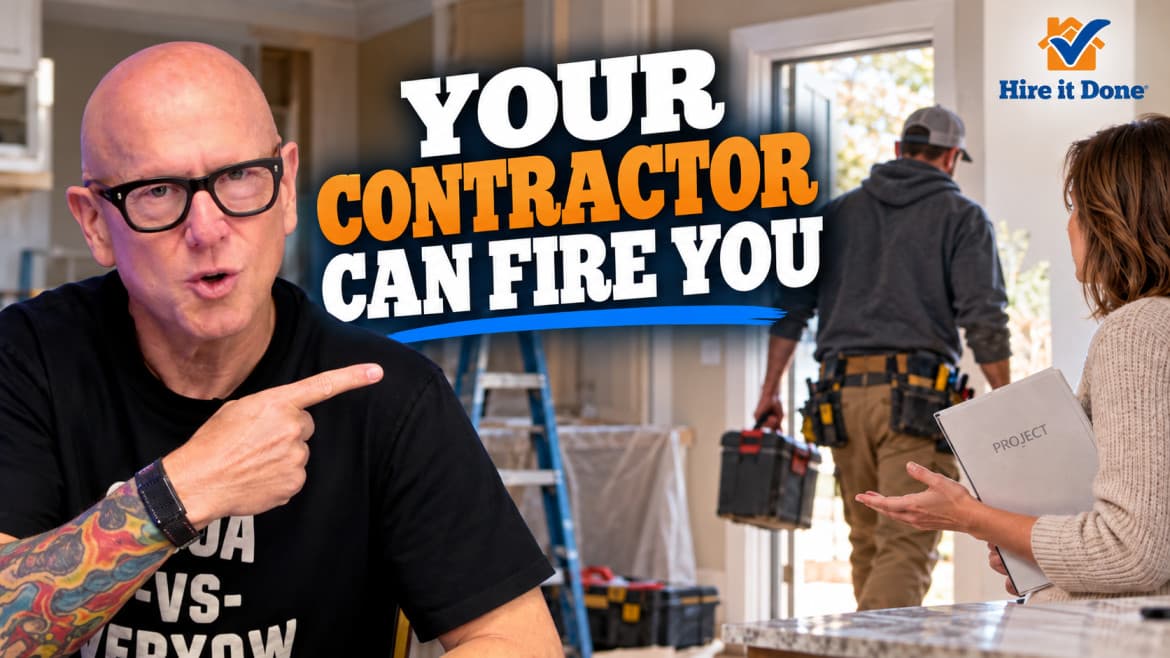

Homeowners hear plenty of advice about how to fire a bad contractor. Adam Helfman used a recent Hire It Done episode to turn that question around: what happens when the contractor decides the homeowner relationship is no longer workable?
His point is not that contractors should walk away whenever a homeowner is difficult. In fact, he argues for trying to save the project first. But he also believes there are moments when the relationship becomes so disruptive that continuing creates more risk for everyone involved.
This episode is practical project guidance, not legal advice. Adam says directly that he is not an attorney. The important takeaway is how to recognize a breakdown early and handle it professionally.
Watch For Payment Problems Early
Adam calls money "the smoke" because payment changes can be an early sign that something else is wrong.
A homeowner starts paying late. A scheduled payment becomes a partial payment. The conversation changes from what the contract says to "I'll pay you when...". That does not automatically mean the project is doomed, but Adam believes it needs an immediate conversation.
Stop Scope Creep Before It Spreads
Adam jokes that the four dirty words of home improvement are "we might as well."
We might as well upgrade the cabinets. We might as well change the countertop. We might as well add another mechanical project while the walls are open.
If you want to add work, slow the conversation down long enough to document the change.
Reopened Decisions Drain The Project
Another warning sign is what Adam describes as decisions being relitigated.
A product gets selected, ordered, and installed. Then the same choice becomes an argument again. Or a homeowner buys a product that requires much more assembly or installation than the contractor originally priced, then expects the original labor number to cover it.
These moments are not just about the product. They show that the two sides may no longer agree on how decisions are made.
A healthy project needs a reliable process: decide, document, price any change, and move forward.
Respect And Access Matter Too
The job can also break down when the crew is being disrespected or cannot work safely and consistently.
Adam gives examples such as aggressive dogs, blocked access, inspections being delayed, or homeowners asking the crew to start late and then complaining that the project is taking too long.
Home improvement is disruptive. Homeowners still need boundaries in their own house, and contractors still need to communicate clearly. But if the working conditions change every day, productivity and trust usually suffer together.
Try A Reset Before Walking Away
Adam's strongest advice comes before the firing conversation: try a reset.
He describes one serious meeting, preferably away from the crew, with phones put down and both sides giving the conversation full attention. The contractor should explain what is working, what is not working, and what needs to change to finish the job correctly.
He also recommends bringing solutions, not just complaints.
The homeowner should get the same opportunity. What is the contractor doing that is creating frustration? What communication is missing? What would make the remaining work smoother?
Then put the reset in writing. A short written recap gives both sides the same reference point for what they agreed to change.
Call First, Then Put It In Writing
If the reset fails and the contractor decides the relationship needs to end, Adam says not to do it in anger or in front of the crew.
Sleep on it. Then call.
His phrase is simple: "The call is human. The letter is the record."
The phone conversation keeps the exit personal enough to avoid an abrupt job-site blowup. The written follow-up creates a record of what was communicated.
Adam also recommends framing the conversation around fit rather than blame: "I don't think I'm the right contractor to finish this project for you."
That does not erase the issues. It keeps the conversation focused on ending the working relationship instead of winning the argument.
Account For Every Dollar
Adam calls this one of the most important parts of ending a project.
The contractor should be able to explain the contract amount, what has been collected, what work is complete, what materials are on site, and what balance or refund remains. The accounting needs to be clear enough that another person can follow it later.
For the homeowner, this is also where organized records matter. Keep contracts, change orders, receipts, payment records, selections, and written communication in one place.
A messy project becomes even messier when nobody can reconstruct the numbers.

Leave The Job Safe And Documented
Walking away does not mean walking off and leaving hazards behind.
Adam says the site should be left safe and weather-tight, with openings secured, trip hazards addressed, and permit or inspection paperwork handled properly. He also recommends handing over the project information the homeowner needs, including specs, model numbers, selections, and warranty documents that belong with the work.
Then document the condition of the job. Take photos. Take wide shots. Record a video walkthrough. Do not assume you will remember the details a year later.
Documentation protects memory before it protects anyone in a dispute.
Keep The Exit Professional
Adam closes with one more rule: do not bad-mouth the homeowner afterward.
That is good advice for both sides. Home improvement communities are smaller than they feel, and emotional comments can travel faster than the facts.
If a project relationship has truly failed, the cleanest ending is often the one that creates the least additional damage. Try to reset it. If that fails, communicate clearly, document the exit, settle the accounting, leave the site safe, and move on professionally.
Frequently Asked Questions
Can A Contractor Fire A Homeowner?
A contractor may decide that a working relationship is no longer sustainable and seek to end the project. Adam's episode focuses on handling that decision professionally, but the contract and any legal obligations still matter.
What Are Warning Signs A Project Is Breaking Down?
Adam points to slow or short payments, constant scope changes, repeated arguments over old decisions, crew disrespect, access problems, and a job that has become consistently hostile or unworkable.
Should A Contractor Walk Away Immediately?
Adam recommends trying a reset first. Sit down, explain the problems and solutions, let the homeowner raise concerns, and then document what both sides agreed to change.
What Is Scope Creep In Remodeling?
Scope creep happens when extra work keeps getting added beyond the original project without a clear change process. Adam warns that casual "we might as well" decisions can quickly change both cost and schedule.
Why Are Change Orders Important?
A change order gives both sides a written record of what changed and how it affects the project. It helps prevent later arguments about whether an upgrade or extra task was included in the original deal.
How Should A Contractor End The Conversation?
Adam says to call first and then follow up in writing. He recommends keeping the message focused on fit rather than turning it into an emotional argument over blame.
What Records Should Homeowners Keep?
Keep the contract, change orders, payment records, product selections, receipts, inspection documents, and important written communication. Good records make it easier to understand what was agreed to and what remains.
What Should Happen To The Job Site?
Adam says the site should be left safe, clean, and protected from the elements, with permit and inspection information handled properly. The homeowner should also receive the project paperwork and information that belongs with the work.
Why Take Photos When A Project Ends?
Photos and a video walkthrough create a time-stamped visual record of the condition of the project. They are more reliable than trying to remember every detail months later.
Tags: