



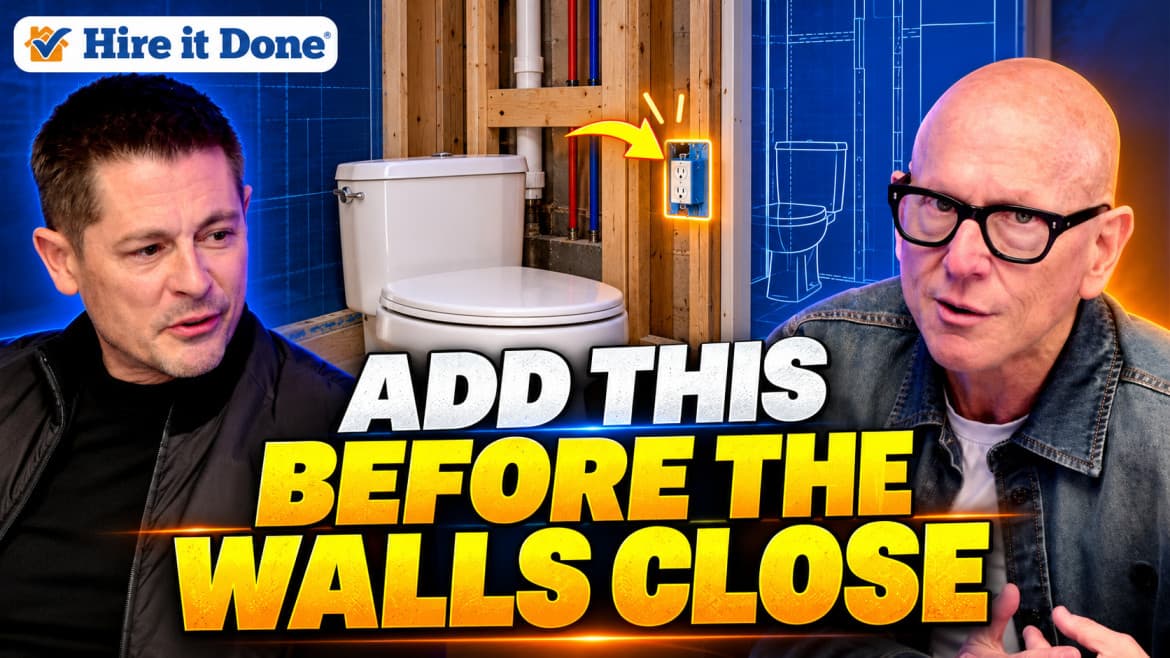

A bathroom remodel can look simple on a mood board. Pick a vanity, choose tile, find a faucet, and you are done. In the real world, the decisions that cause the most frustration are often the ones hidden behind the finished surfaces. Power, plumbing locations, shower controls, moisture management, and accessibility are much easier to solve before the walls close than after the room is complete.
On a recent Hire It Done episode, Adam Helfman spoke with Nathan Caspers of Infusion Kitchen & Bath Showrooms, a regional manager who oversees seven showrooms in Michigan. Their conversation covered high-end fixtures and new technology, but some of the most useful advice was much more basic: plan for how you will actually use the bathroom before installation locks you in.
If you are preparing for a bathroom remodel, these seven decisions are worth making early.
Plan Power Before Walls Close
One of the simplest tips in the episode was also one of the easiest to miss. Nathan recommends considering an electrical outlet near the toilet while the bathroom is already under construction, even if you do not plan to install an intelligent toilet or powered bidet seat today.
Why? Because the upgrade is easier when the wall is open and the electrician is already on site. Adding power after the tile, drywall, baseboards, and finishes are complete can require a separate visit and more invasive work.
You do not need to buy the powered fixture now. You are simply giving yourself an option later. Ask your electrician and contractor where the outlet would need to be, what code requirements apply, and what the added cost would be while the room is already open.
This is a good example of future-proofing that does not force you into a specific product. You are paying for flexibility.
Choose How The Shower Works
Homeowners often spend more time choosing the shower finish than deciding how the shower will actually work. Nathan described a fixed shower head plus a hand shower as the new normal because the combination gives you more control over how the space is used.
A hand shower can make it easier to rinse the walls, clean the enclosure, wash a pet, help a child, or shower without putting water directly over your head. It can also make the shower more adaptable if mobility changes later.
Before rough plumbing is finalized, stand in the unfinished shower and think through your routine. Where should the controls be? Can you turn the water on without standing under a cold spray? Where will the hand shower sit? Is the hose long enough to reach the bench or the far wall?
Those questions are easier to solve on paper or during framing than after the tile is installed.
Decide How Much Grout You Want
Tile is popular because it gives you almost unlimited design options. The tradeoff is grout. More joints mean more lines to clean, seal, and maintain.
Nathan discussed large-format shower wall panels that can create a stone-like appearance with far fewer joints. He explained that some systems use large sheets made from materials such as fibrous resin and ground stone, allowing installers to cover a shower wall with a single panel.
The point is not that every bathroom should use panels instead of tile. The point is that maintenance should be part of the material conversation. If you hate scrubbing grout, tell your designer or contractor before the material is ordered. If you love the look of small tile and are comfortable with the upkeep, that may still be the right choice.
Design is easier when you are honest about how much maintenance you want to own.
Build Moisture Control Into Design
A beautiful shower still has to deal with water every day. Steam, wet walls, damp corners, and slow-drying surfaces can all add to the cleaning burden.
The episode included a newer product called AirMada, which Nathan described as a localized air system that moves air through outlets in the shower to help dry wet surfaces. You may or may not need that level of technology, but the underlying planning question matters in every bathroom: how will this room dry out?
Talk with your contractor about exhaust ventilation, duct routing, fan sizing, make-up air, shower enclosure design, and how quickly moisture can leave the room. If you are building a steam shower, moisture management becomes even more important because the enclosure is intentionally creating a high-humidity environment.
Do not treat ventilation as the boring item that gets whatever money is left. It is part of protecting the finished room.
Plan For Changing Mobility
Nathan also discussed a shift he is seeing among homeowners who want to stay in their houses longer. Bathroom choices are increasingly being made around access, comfort, and aging in place.
That does not automatically mean installing a walk-in tub or making the room look institutional. It can mean choosing a shower with easier entry, leaving space for a future bench, using a hand shower, placing controls where they are reachable, or choosing a tub configuration that gives someone a stable surface to sit on before swinging their legs in.
If this is a long-term home, ask yourself a direct question: would this bathroom still be easy to use if your balance, strength, or mobility changed?
You may not need every accessibility feature today. But a little space and smart placement can make future modifications easier.
 Buy Fixtures For Long-Term Use
Another major theme was the difference between buying a fixture for the life of the design and buying it for the life of the home. Nathan explained that some showroom products use different internal components than versions homeowners may see in big-box retail. His examples included neoprene versus rubberized gaskets and metal or brass components instead of plastic-coated polymer in certain spray heads.
That does not mean every showroom product is automatically better or that every retail fixture is a bad purchase. It means you should compare more than the brand name. Ask what the fixture is made of, what parts are replaceable, what the warranty covers, and how service works if something fails.
Also consider the cost of replacement. A faucet on an open vanity is easier to change than a complicated shower valve buried behind finished tile. The harder a component is to access, the more important long-term serviceability becomes.
Design For Daily Life
Adam made a point during the episode that homeowners often forget when they get focused on resale: you still have to live in the house.
Resale matters, but it should not be the only reason you keep a tub you never use, skip a shower feature that would help every morning, or choose a layout that looks good but frustrates you every day.
Nathan described luxury as comfort in the spaces we use. That is a useful filter for a remodel. A heated towel rail, steam shower, smart toilet, touchless faucet, or premium fixture is only valuable if it improves your routine enough to justify the cost.
Spend first on the parts of the bathroom that affect you every day: layout, water delivery, lighting, ventilation, storage, cleaning, safety, and reliable fixtures. Then decide which extras make the room more enjoyable.
Make The Decisions While They Are Cheap
The best time to change a bathroom is before the tile is set, the walls are closed, and the fixtures are installed. That is when an extra outlet, a different valve location, a hand shower, future blocking, or a ventilation change is still a planning decision instead of a demolition decision.
Before your contractor starts closing walls, walk the room and review the plan one more time. Think about your current routine, your future needs, and the maintenance you are willing to do. Ask where power, plumbing, controls, access panels, ventilation, and support blocking will be located.
A successful remodel is not the one with the longest product list. It is the one that keeps working after the excitement of the reveal is over.
Tags: