




Hiring a contractor should not feel like a gamble. But for a lot of Metro Detroit and Southeast Michigan homeowners, it does. You are about to spend serious money on a roof, bathroom, windows, siding, or another major project, and one bad decision can turn into delays, surprise charges, sloppy work, or a contractor who disappears when something goes wrong.
That is why this topic from a recent Hire It Done episode matters. Adam Helfman laid out the questions homeowners should ask before any money changes hands and before “a single tool comes out of the truck.” If you want to hire a contractor without getting burned, these are the questions that help you protect your home, your money, and your time.
1. Are you licensed and insured?
Start here every time.
A contractor may say yes right away, but you should not stop there. Ask for the license number. Ask for proof of insurance. Ask for the name of the insurance agent so you can verify coverage. If the work requires licensing in your city or township, confirm that too.
This matters even more in Southeast Michigan because permit rules and licensing requirements can vary by municipality. A contractor who is fully qualified in one setting may still need to meet local requirements where you live.
If the contractor gets uncomfortable when you ask for documentation, that is not a great sign. You are not being difficult. You are doing basic due diligence before trusting someone with your property.
2. Who is actually doing the work?
Many homeowners think the person who sells the job is the person doing the job. Sometimes that is true. Often it is not.
Ask who will be on site. Ask whether the company uses in-house crews, subcontractors, or specialists. Ask who supervises the work. Ask whether the same team handles installation from start to finish.
This is especially important for projects like windows, roofing, kitchens, and bathrooms. A polished sales presentation does not tell you who is showing up at your house on day one. You need clarity on that before you sign anything.
3. Who is my point of contact during the project?
Even a good project gets stressful when you do not know who to call.
You should know exactly who handles questions, schedule changes, punch-list items, and daily communication. For a one-day job, this may be simple. For a multi-week remodel, it is essential.
If your bathroom is torn apart for three weeks, you should not be left guessing whether you should call the salesperson, the office, the project manager, or the installer. One point of contact keeps communication clean and helps problems get handled faster.
4. What does your warranty cover, and is it in writing?
Adam made this point clearly: do not settle for vague promises.
Ask what is covered under labor. Ask what is covered under materials. Ask how long each warranty lasts. Ask whether the contractor is using the word warranty correctly, or whether they are casually mixing it up with a guarantee.
Then ask for everything in writing.
That step matters because memory gets fuzzy fast. If something fails three or six months later, you do not want a debate about what was said at the kitchen table. You want a written agreement you can point to. As Adam put it, “Let me see it in writing.”
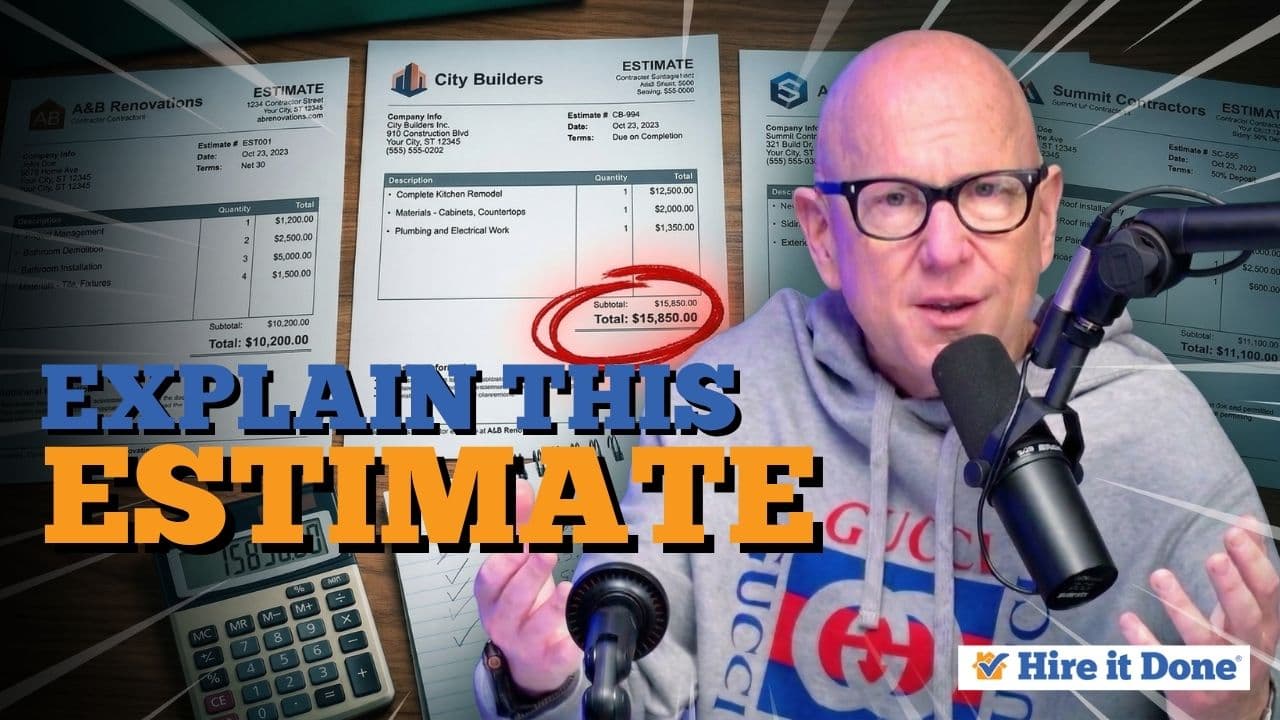
5. Can you explain your estimate?
This is one of the smartest questions in the whole episode because it forces clarity.
If one estimate is much lower or higher than the others, ask why. Do not assume the cheapest bid is the best deal, and do not assume the highest bid means better quality. Ask what is included, what is excluded, what materials are being used, and what level of installation you are paying for.
A contractor should be able to walk you through the estimate line by line in plain English. If they cannot explain it clearly, you should think twice.
This question also helps you compare apples to apples. Two bathroom remodel bids may look similar at first glance, but one may include demo, disposal, waterproofing, permits, and finish work while the other leaves half of that out.
 6. Do you pull permits when required?
If a permit is required, it needs to happen. Period.
Homeowners sometimes try to avoid permits because they do not want extra fees, extra paperwork, or extra attention from the city. Adam pushed back on that hard. His point was simple: permits may feel like a nuisance, but they protect the homeowner.
Why? Because a permit brings in another set of eyes. An inspector has a chance to review the work and catch something you may not notice.
For homeowners in Metro Detroit and Southeast Michigan, this matters because every city handles permits a little differently. You should ask whether a permit is required, who is pulling it, what it costs, and how it affects the timeline. Budget for it upfront instead of letting it turn into an argument later.
7. How do you handle change orders and hidden problems?
This is where many home improvement jobs go sideways.
A contractor opens a wall, pulls out an old tub, or demos a bathroom floor and finds rotten wood, mold, or water damage. Suddenly the original price no longer covers the real scope of the work.
That does not always mean the contractor is dishonest. Sometimes the issue was hidden. Adam used the example of a bathroom where rot and mold showed up around the toilet because of a slow leak. That is a real-world problem, not an excuse.
The issue is not whether surprises happen. The issue is how the contractor handles them.
Ask this before the job starts: What happens if you find something unexpected? How do you price change orders? Do you stop and get approval first? Do you put the added scope and cost in writing?
Adam’s advice was strong here. Any extra cost, any shift in scope, and any change in the rhythm of the job should be discussed and agreed upon before the work is done.
8. Can you put the timeline in the contract?
A contractor may hesitate to give exact dates because jobs can be delayed by weather, permits, shipping issues, damaged materials, or discoveries behind walls. That is fair. But you still need a written framework.
Ask for a reasonable start window. Ask what triggers the official start date. Ask for an expected completion range. Ask what could legitimately delay the project.
A realistic timeline is better than a fantasy promise. If someone guarantees a hard finish date with no room for real-world issues, you should be careful. What you want is transparency, not empty reassurance.
9. What is the payment schedule?
This question protects your leverage.
Do not focus only on the deposit amount. Ask how payments are tied to project milestones. A smart payment schedule should line up with completed work, not just the contractor getting started.
Adam recommended breaking payments up so the contractor stays accountable. That does not mean every contractor asking for a deposit is a problem. It means you should understand when money is due, why it is due, and what you are getting before the next payment goes out.
If the payment structure feels lopsided in the contractor’s favor, slow down.
10. Can you give me references for similar jobs?
Not just any references. Similar-job references.
If you are getting replacement windows, ask for other window projects. If you are remodeling a bathroom, ask for bathroom clients. If possible, ask for jobs in your area or nearby ZIP codes.
A good reference is not just proof that the contractor has customers. It is proof that they have handled your kind of project successfully.
When you speak to former clients, ask more than “Were you happy?” Ask whether the job stayed on schedule, whether change orders were handled fairly, whether communication was good, and whether they would hire the company again.
11. Have you had complaints, and how were they resolved?
This is an uncomfortable question, but it is a smart one.
Adam pointed out that complaints do not automatically mean a contractor is bad. Larger companies doing a lot of work may get complaints. What matters is how they respond.
Ask whether complaints have been filed through the Better Business Bureau, the state, or other channels. Then listen closely to how the contractor answers. A clear explanation and a mature resolution process can actually build trust. Evasion, defensiveness, or refusal to discuss it should make you pause.
You are not looking for perfection. You are looking for honesty and professionalism.
12. What makes your company the right fit for this job?
This final question pulls everything together.
You are not just buying a product. You are hiring judgment, communication, workmanship, and follow-through. Adam said it plainly in the episode: the best roof, the best window, and the best bathroom are the ones installed properly.
That idea matters because homeowners often get distracted by brands, features, and sales pitches. Products matter, but installation matters more. A premium product installed badly can still fail. A solid product installed properly can serve you well for years.
So ask the contractor why their process, crew, communication style, and installation standards make them the right fit for your home.
 Ask better questions, get a better project
If you are hiring a contractor in Metro Detroit or Southeast Michigan, do not walk into the process hoping everything works out. Walk in prepared.
Ask about licensing. Verify insurance. Get warranties in writing. Understand the estimate. Clarify permits. Talk through change orders. Nail down communication, timeline, and payment structure. Check references and ask about complaints.
Those questions do more than protect you. They also send a message that you take your home seriously.
That was one of the strongest takeaways from this recent Hire It Done episode. When you ask better questions, you give yourself a much better chance of hiring the right contractor the first time, and that can save you money, stress, and a whole lot of regret.
Tags: