


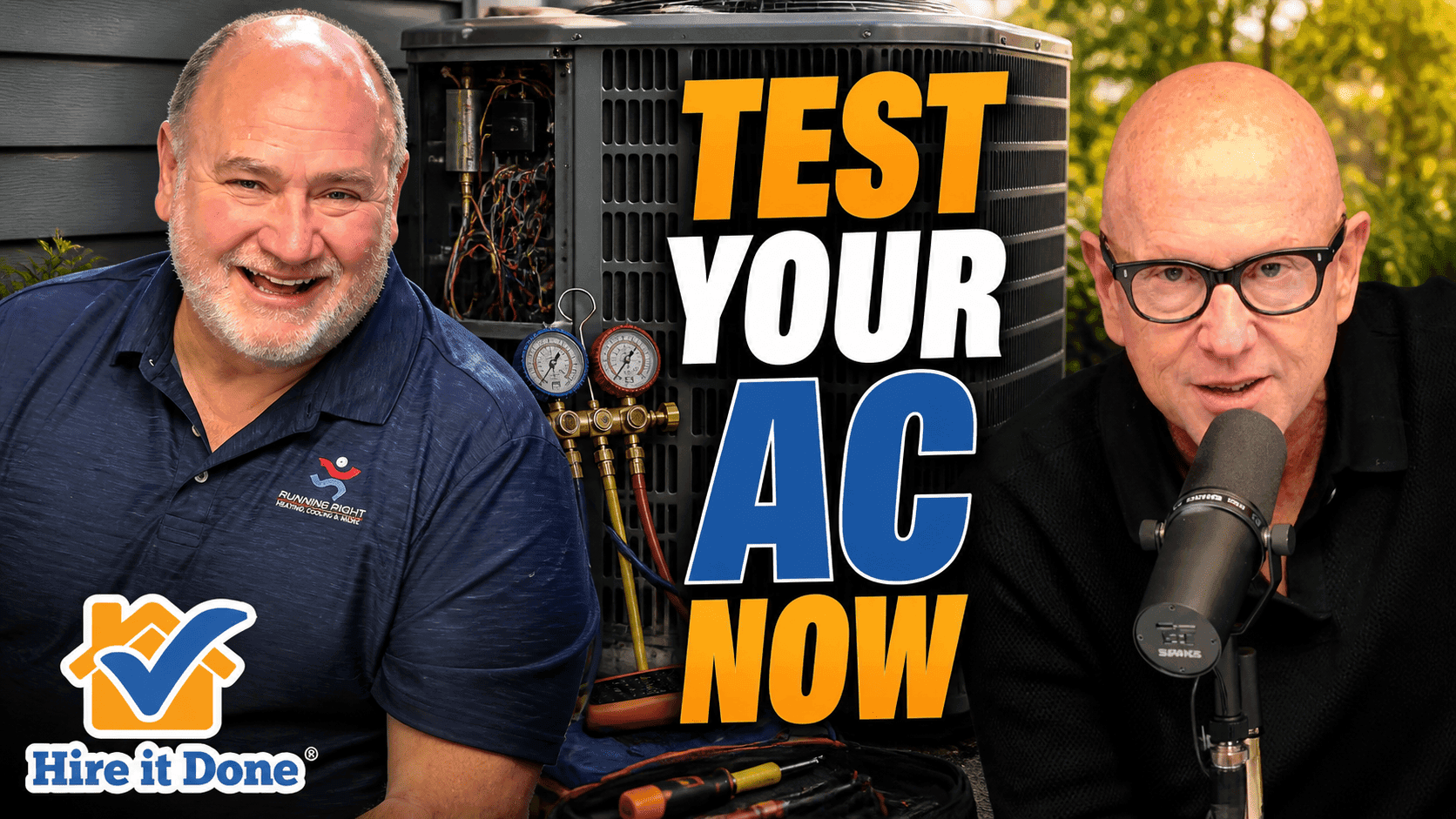

Spring is the best time to get your heating and cooling system ready before the first hot day exposes a problem. Once the temperature jumps and everyone turns on their air conditioner at the same time, HVAC companies get flooded with calls. That is when homeowners get stuck waiting, sweating, and wishing they had checked the system earlier.
On this episode of Hire It Done, Adam Helfman spoke with Ron Garmo and Gary Shelley from Running Right Heating and Cooling, along with co-host Brian Lee of Metro Home Improvements. The conversation covered spring AC tune-ups, when to replace older equipment, how mini splits work, and why indoor air quality should be part of the HVAC conversation.
The big lesson is simple: do not wait until your system fails to start asking questions. A little planning now can save you stress, money, and bad decisions later.
Why Should You Test Your AC Before the First Hot Day?
The first thing homeowners should do in spring is turn on the air conditioner during a warm day and see if it works. Gary Shelley explained that when the weather gets into the 70-degree range, it is a good time to run the system and have a technician come out for a spring maintenance check.
That does not mean blasting the AC during cold weather. It means using an early warm day to confirm that the system starts, cools, and runs the way it should.
Ron Garmo added the practical reason this matters: the first hot day is when HVAC companies get bombarded with calls. Everyone waits, everyone turns on the AC, and everyone with a problem suddenly needs service at the same time.
Testing early gives you a better chance to catch issues before you are competing with every other homeowner for an appointment.
When Is It Time to Replace an Old Air Conditioner?
Replacement does not come down to one magic number, but age matters. In the episode, Gary explained that once equipment reaches the 20-plus-year range, homeowners should start thinking seriously about upgrading to newer, more efficient equipment.
That does not always mean you replace the unit immediately. It means you stop treating every repair like an isolated event. If the unit is old, inefficient, and starting to need repairs, the smarter question is whether that repair money should go toward a new system instead.
Ron explained the repair-or-replace decision this way: look at the age of the unit, the cost to fix it, and your budget. Sometimes a repair makes sense. Other times, replacement gives you better efficiency, a stronger warranty, and fewer headaches.
The worst time to make that decision is when it is 90 degrees outside and the system has already crashed.
What Is a Mini Split and When Does It Make Sense?
Mini splits came up several times in the conversation because they can be a practical option for certain spaces. Gary explained that a mini split typically has an indoor unit mounted on the wall and an outdoor condensing unit outside. Some systems can also connect multiple indoor heads to one outdoor unit.
Mini splits can make sense for bonus rooms, additions, garage-adjacent spaces, and rooms where traditional ductwork is difficult or not practical. Brian Lee explained that when he is planning additions, the HVAC plan has to be considered early. If a home is getting a large addition, the existing furnace and AC may not have enough capacity to handle the new square footage.
For garage spaces, Gary made another important point: you cannot tie a garage into the existing HVAC system for the house. A garage needs a separate solution. Depending on the situation, that may mean insulation, a mini split, or a standalone heating and cooling system.
The right answer depends on the space, the structure, and the homeowner's goals.
Why Does Proper Installation Matter More Than Brand Names?
Homeowners often ask which brand is best. That is understandable, but the episode made one thing clear: installation matters more than the label on the equipment.
When Adam asked Ron what the best mini split was, Ron answered, 'The best mini split is the one that is installed right.'
That applies across home improvement. A great brand installed poorly can still create problems. Whether it is a furnace, air conditioner, mini split, window, or roof, the contractor's workmanship can make or break the product.
That is why homeowners should not shop only by brand or price. They should ask who is installing the system, how it will be sized, what the plan is, how the contractor handles service, and what kind of support is available if something goes wrong.
How Can HVAC Help Improve Indoor Air Quality?
Indoor air quality was another major part of the conversation. Adam pointed out that the furnace is like the lungs of the house, and Ron agreed. If the system is circulating air throughout the home, then filtration and airflow matter.
Gary recommended that homeowners consider upgrading from the standard one-inch filter to a four-to-five-inch media filter. The biggest difference is surface area. A larger media filter gives the system more filtering surface compared with a small one-inch filter that homeowners commonly slide in and out.
Adam also explained that more efficient filters need to be maintained properly. If a filter gets dirty and plugged, it can restrict airflow and force the blower motor to work harder. That can shorten the life of the system and create other problems.
Ron also discussed indoor air quality options like REME HALO-style systems, which can be installed in the ductwork depending on the setup. These systems may help address germs, contaminants, and air purification needs, but the right solution depends on the home.
What Should Homeowners Do This Spring?
If you want to avoid HVAC surprises this spring and summer, start with the basics.
Turn the AC on during a warm day and confirm it works. Schedule a spring maintenance check before the first hot day. Clear the outdoor condenser and give it room to breathe. If your system is 20-plus years old, start asking whether repair or replacement makes more sense. If you are adding space, talk about HVAC early in the project. And if air quality is a concern, ask about filters, airflow, and purification options.
The goal is not to scare homeowners into replacing equipment too early. The goal is to help them avoid rushed decisions, bad installations, and emergency calls that could have been prevented.
A smart homeowner does not wait for the system to fail. A smart homeowner gets ahead of it.
Tags: