




Hiring a contractor should not feel like a gamble. But for a lot of homeowners, that is exactly what it becomes. Someone gives you a name. You check a few reviews. You compare a couple of prices. Then you hope the person who shows up at your house is honest, organized, and qualified enough to get the job done right.
That is not a strategy. That is a roll of the dice.
On a recent Hire It Done episode, I walked homeowners through the questions they should ask before hiring a contractor. This matters whether you are remodeling a bathroom, replacing a roof, installing brick pavers, updating insulation, or hiring someone for plumbing, electrical, heating, cooling, siding, kitchens, baths, or concrete work.
The goal is simple: ask better questions before the job starts so you are not stuck trying to solve bigger problems after the job goes sideways.
Start By Vetting The Referral
A referral is helpful, but it is not proof. Your neighbor, friend, or Facebook group might have had a good experience, but you still need to ask what actually happened on their job.
Start with this: how long ago did the contractor do the work? If the job was completed years ago, ask how the work held up. If it was just finished, ask how the process went from start to finish.
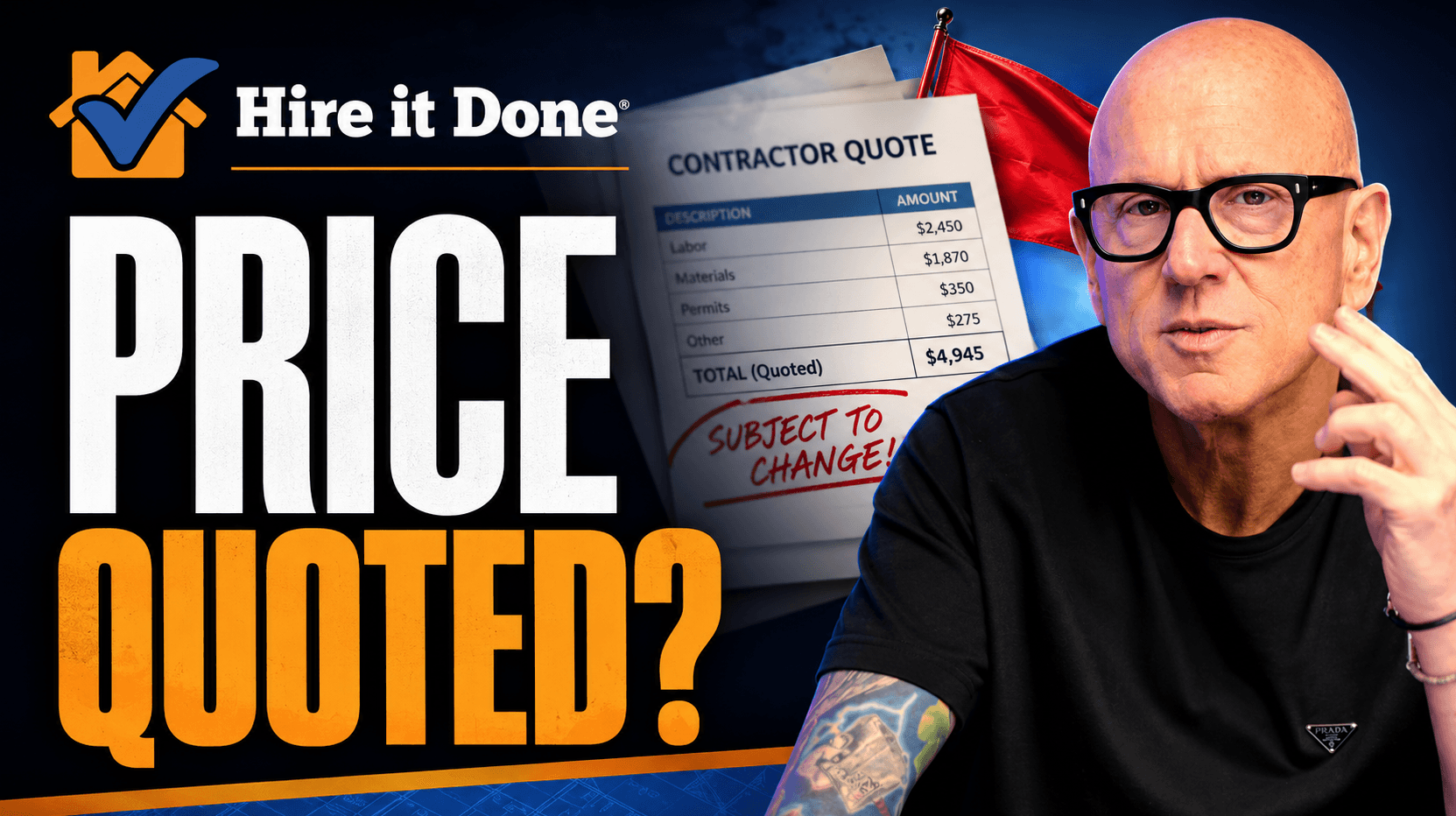
Then ask one of the most important questions in the entire episode: was the price you were quoted the price you paid? If the answer is no, ask why. Sometimes changes are legitimate. Sometimes hidden costs appear because the scope was weak from the start. You need to know the difference before you hire the same contractor.
Also ask about timing. Did they start when they said they would? Did they finish when they said they would? Delays can happen in home improvement, but a contractor should be able to communicate clearly when things change.
Ask How They Treated The Home
A good contractor is not only measured by the finished photo. Ask how the crew treated the home while the work was happening.
Did they protect the floors? Did they protect landscaping, furniture, and the existing environment? Did they define what cleanup meant, or did everyone assume a different standard?
This matters because dust, debris, water, tools, and foot traffic are part of real home improvement. A contractor who respects the home during the job usually respects the homeowner too.
Ask About Communication
Communication is the nucleus of hassle-free home improvement. If communication is weak, the project can become stressful even when the actual work is good.
When you talk to a past customer, ask whether the contractor communicated or whether the homeowner had to chase them. Did they explain the schedule? Did they answer questions? Did they respond when something changed?
This is one of the biggest signs of how the job will feel once your house is opened up and your money is already committed.
Ask The Question That Reveals Everything
Before you end a referral call, ask this: what is one thing you wish you had known before you hired them?
That question can give you the little details that never make it into a review. Maybe the contractor did great work but communication was slow. Maybe the crew was clean but the timeline stretched. Maybe the homeowner loved the result but wished the payment schedule had been clearer.
Then ask the final question: would you hire them again?
After you ask, pause. If they hesitate, pay attention. If they answer quickly and confidently, that tells you something too.
Do Not Stop At Licensed And Insured
Yes, you should ask if a contractor is licensed and insured. You should also ask to see the actual documents, not just a photo or a casual promise. In Michigan, homeowners can verify license information through the proper state resources. In other areas, search for your local contractor license verification site.
But licensed and insured is the starting line, not the finish line.
Ask who your project manager will be. Ask whether that person will be on site daily or checking in at key moments. Ask whether the crews are employees or subcontractors. Subcontractors are not automatically a red flag. The better question is whether the contractor has used them before and whether they are part of a reliable process.
Understand The Payment Schedule
Payment schedule is one of the areas where homeowners get nervous, and for good reason. You do not want to overpay before enough work has been completed.
In the episode, I used a $30,000 bathroom as an example. Instead of automatically handing over 50% down, I recommended thinking in milestones: a deposit at signing, another payment when the permit is ready or the job walk-through happens, and another payment upon completion of demo.
The key word is completion. Paying when a stage is completed protects the homeowner more than paying just because a stage has started.
A good payment schedule should create fairness for both sides. The contractor needs enough money to operate. The homeowner needs protection from paying too much too soon.
Ask What Is Not Included
This might be one of the most valuable questions in the entire contractor interview: what is not included?
Ask the contractor to write the proposal like a story, with a beginning, middle, and end. Then ask them to add what is excluded from the scope.
That one question forces clarity. It helps you spot assumptions before they become arguments. It also helps the contractor catch anything they forgot to explain, such as extra dumpsters, city-required upgrades, homeowner-requested changes, or materials that are not included in the original scope.
If something matters to you, get it in writing before the work starts.
Ask About Permits, Change Orders, And Warranty
Permits matter. If a contractor tells you not to pull permits because your taxes will go up or because the city will not know, consider that a red flag. In my experience, permits are usually worth it because they add another set of eyes and can protect you later if you sell the home.
Change orders also need to be clear. Ask how they are handled. Are they in writing? Do they need to be signed before the work starts? Can they be approved by text? The important part is that both sides understand the change, the cost, and the approval before the work continues.
Warranty is another area where vague promises can create problems later. Ask whether the warranty covers labor, materials, or both. Ask how long it lasts. Ask what happens if there is a problem a year from now. Then get it in writing.
Have A Dispute Plan Before You Need One
The best way to handle a contractor dispute is to avoid one. That starts with the questions above.
But if something does go wrong, do not get emotional and do not automatically stop paying. Start documenting. Take photos. Save texts. Send calm, factual emails. List exactly what is wrong and ask the contractor for their plan to make it right.
A good contractor wants to fix legitimate problems. Give them the opportunity to do that. If they do not respond or refuse to make it right, then you can escalate in steps through the contract process, the Better Business Bureau, the state licensing board, small claims court, or legal advice if needed.
The homeowner who stays calm, organized, and documented is in a much stronger position than the homeowner who only reacts emotionally.
Final Takeaway
Do your homework before the job starts. Ask better questions. Get the important details in writing. Understand the payment schedule. Clarify what is not included. Know how change orders work. And when something goes wrong, document before you escalate.
Home improvement will always have moving parts. But when you hire smarter, communicate better, and protect yourself with the right questions, you give yourself the best chance at a smoother project.
For more homeowner protection tips and trusted contractor guidance, visit hireitdone.com and connect with Hire It Done.
Frequently Asked Questions
What is the first question to ask before hiring a contractor?
Ask whether they are licensed and insured, then ask to see the actual documents. After that, move into project-specific questions about scope, permits, timeline, payment schedule, and communication.
How do I check if a contractor referral is reliable?
Call the homeowner who used them and ask how long ago the work was done, whether the final price matched the quote, how the crew treated the home, and whether they would hire the contractor again.
Why should I ask what is not included in a contractor proposal?
This question helps uncover assumptions before the project starts. It can reveal exclusions, possible add-ons, city requirements, material limits, and other costs that may not be obvious in the original proposal.
Is the lowest contractor bid usually the best choice?
Not always. The best choice is the qualified contractor you trust, understand, and can afford. A low price can become expensive if the scope is unclear or the work creates problems later.
Should a contractor pull permits?
For many projects, permits are important because they create an official record and add another layer of inspection. If a contractor tells you to avoid permits without a solid reason, treat that as a warning sign.
What should I do if I have a dispute with my contractor?
Stay calm, document everything, and send a factual written message explaining the issue and what you want fixed. Give the contractor a fair chance to respond and make it right.
Can text messages count as documentation?
Text messages can be useful documentation, especially for approvals, changes, and written communication. For important issues, also keep emails, photos, dates, contracts, and any written change orders.
When should I make the final payment?
Final payment should be tied to the payment terms in your contract. Adam recommends thinking in terms of usable completion, but the key is to define final payment expectations before the job starts.
Tags: