



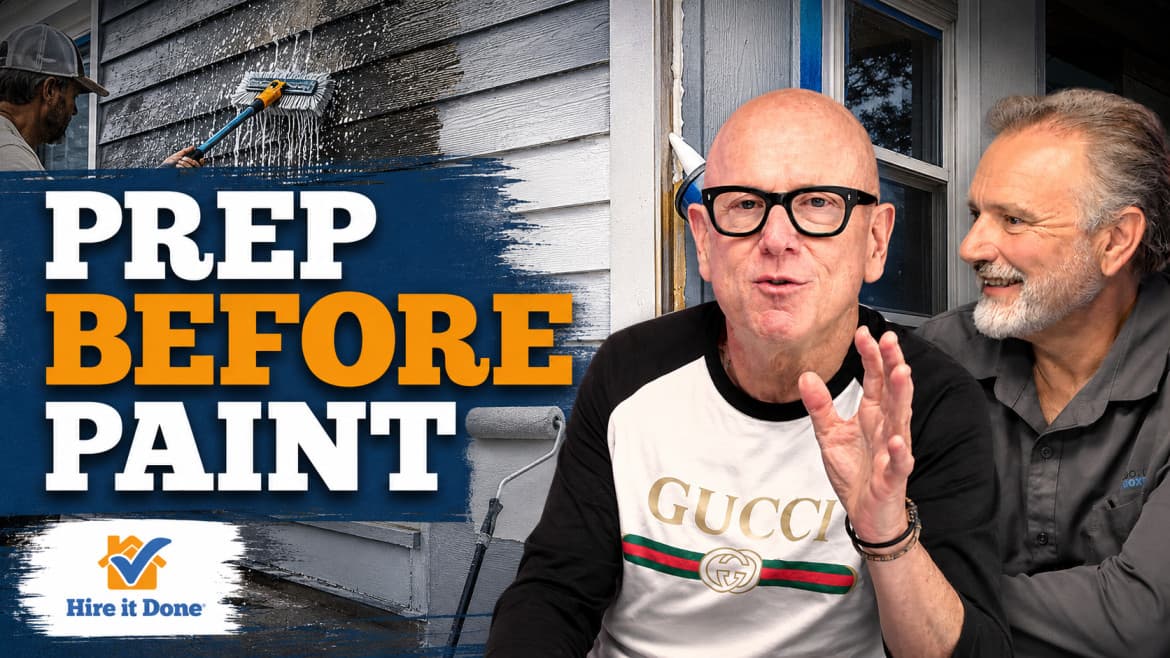

Cheap fixes can become expensive repeat repairs. Learn how painting, water filtration, and contractor shortcuts affect long-term home costs.
In short: The cheapest home improvement option is not always the lowest-cost option over time. Homeowners should compare the upfront price with the likely lifespan, repair risk, product quality, and convenience of doing the job properly the first time.
There is a phrase from this Hire It Done episode that sums up the entire conversation:
The math starts mathing.
Adam Helfman, John Cox of Roost Booster Painting and Remodeling, and Jerrad Beauchamp of Beauchamp Water Treatment Solutions used painting and water treatment as examples, but the lesson applies across home improvement.
A short-term fix can feel smart.
Then two or three years later, the same problem comes back.
The paint is peeling again. The cheap water system is not doing the job. The repair that was supposed to be temporary becomes another line item on the homeowner's budget.
That is when the homeowner realizes the cheaper option was not really cheaper.
Why homeowners choose short-term fixes
Most homeowners are not trying to make bad decisions.
They are trying to balance cost, timing, and priorities.
Sometimes they think they are moving soon. Sometimes the project is unexpected. Sometimes the estimate feels higher than expected. Sometimes they simply do not know the difference between a good scope and a thin one.
That is normal.
The danger is when the lower price hides missing work, weaker products, or shortcuts that affect the result.
In painting, that might mean skipping proper prep or primer.
In water treatment, that might mean relying on a refrigerator filter when the home really needs a stronger drinking water system.
In exterior maintenance, that might mean painting over wood that should have been repaired.
The cheapest number on the estimate does not tell the full story.
Painting shortcuts homeowners should understand
John Cox explained that paint quality matters, but the application matters just as much.
A premium paint applied incorrectly can still fail.
If the surface is dirty, glossy, peeling, or compromised, even expensive paint can bubble, peel, or wash off sooner than expected. John also talked about watered-down paint and product substitution as red flags. He did not say every painter does it, but he made clear that it happens.
That is why homeowners should ask what paint will actually be used and what prep is included.
A good painting estimate should answer questions like:
What surfaces will be washed?
What will be scraped?
Will failed caulk be replaced?
What primer will be used?
Is the primer for bonding or just color coverage?
What areas need repair before paint?
How will floors, landscaping, and other surfaces be protected?
When those details are missing, the cheaper quote may simply be leaving work out.
Why water treatment has the same lesson
Jerrad Beauchamp brought the same long-term cost thinking to water filtration.
A lot of homeowners believe a refrigerator filter is enough. It may help, but Jerrad explained that it is only one stage of filtration. For homeowners who buy bottled water regularly, reverse osmosis may make more financial sense than they realize.
The cost is not just the case of water at the store.
It is the repeated purchase.
The storage.
The hauling.
The plastic bottles.
The inconvenience.
And the fact that many families keep buying bottled water because they still do not fully trust or enjoy the water coming from the tap.
Jerrad explained that a reverse osmosis system can make drinking water at a much lower cost per gallon over time. The exact math depends on the system and the household, but the bigger point is simple: the upfront price is not the only number to compare.

A cheaper short-term habit can be more expensive over the life of the home.
The hidden cost of doing the same repair twice
One of the most common homeowner mistakes is assuming a quick fix only needs to last a short time.
I am only going to be here for a year.
I just need this handled for now.
I do not want to spend more money on this house.
Then life happens.
The homeowner stays.
The same problem comes back.
Now the first payment did not solve the problem. It only delayed it.
That does not mean homeowners always need the most expensive option. It means they need the right option for the situation.
Sometimes phasing a project makes sense. John said work can be phased, but homeowners should understand that splitting the work can add trip charges and setup costs. If the crew already has ladders and equipment on site, it may be less expensive to complete related items together than to bring the crew back later.
That is useful information.
The homeowner can still choose to phase the work, but the decision is clearer.
How to compare quotes beyond price
When reviewing home improvement estimates, homeowners should look beyond the final number.
Ask:
What work is included?
What work is excluded?
What products will be used?
What prep or protection is included?
What problems could cause the job to fail?
What happens if I choose not to do a recommended repair?
Can the job be phased?
What costs more if it is done later?
What warranty applies?
Is the contractor licensed and insured?
A lower quote may still be the right quote. But it should be lower for a clear reason, not because the scope is vague or important steps are missing.
The role of trusted contractors
Homeowners do not need to become painters, plumbers, water treatment experts, or remodelers.
They do need to know enough to ask better questions.
That is where trusted contractors matter.
A good contractor should listen, inspect, explain, and guide the homeowner through the options. Jerrad said in the episode that the contractor needs to find out what the customer is looking for, whether that is a basic option, a middle-of-the-road option, or the best of the best.
That is the right mindset.
There is no one-size-fits-all answer for every home.
But there should always be a clear explanation.
The homeowner takeaway
Cheap is not always bad.
Expensive is not always better.
The right question is: what am I actually getting, and how long is it likely to last?
Whether you are hiring a painter, repairing exterior wood, replacing gutters, or choosing a water filtration system, the smartest decision is usually the one that weighs upfront cost against long-term performance.
The full episode is worth watching for homeowners who want to make better decisions before spending money on their home.
What stood out most: the paint prep warning, the refrigerator filter conversation, or Jerrad's reminder that short-term solutions often become repeat costs?

Call 248-927-1985 or visit https://hireitdone.com/ to connect with trusted home improvement professionals and learn the right questions to ask before your next project.
Where to subscribe: Hire It Done Website | YouTube | Facebook | Instagram
FAQ
Question: Are cheap home improvement quotes always bad?
Answer: No. A lower quote can be fine if the scope, products, prep work, and expectations are clear. The risk is when the low price leaves out important steps.
Question: Why can cheap paint jobs cost more later?
Answer: If prep, primer, or repairs are skipped, the paint can fail earlier and require repainting sooner than expected.
Question: Is a refrigerator filter enough for drinking water?
Answer: A refrigerator filter may help, but it is not the same as a full reverse osmosis drinking water system.
Question: Should homeowners phase home improvement projects?
Answer: Phasing can make sense for budget reasons, but homeowners should ask whether splitting the work will add trip charges or make the project cost more overall.
Tags: